文
A
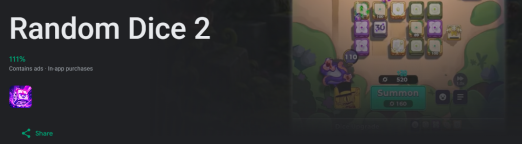
With about 130,000 cumulative downloads and roughly US$170,000 in revenue over its first three days, Random Dice 2 is still in the initial launch-validation stage. While retaining random summoning and merge-based tower defense, the game rebuilds long-term progression around the Dice Tree, seven-pip awakenings, and Supporters.
South Korean casual-game developer 111%, sometimes nicknamed the 'toxic factory,' has always been a prolific tester of new games. Relying on parallel development by small teams, short production cycles, and frequent trial and error, the company has released new titles year after year across tower defense, merging, roguelike, and other genres. One of its recent releases, however, is clearly different from its usual gameplay experiments and has attracted considerable attention: Random Dice 2.

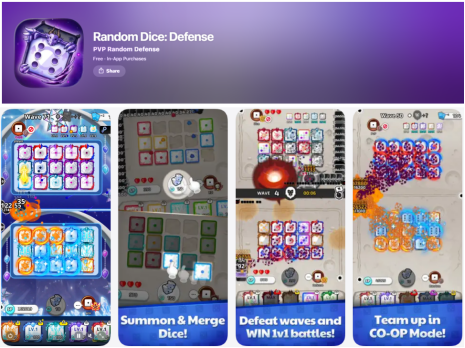
The title is the official sequel to Random Dice, 111%'s first global hit. Released in August 2019, the original combined tower defense, random summoning, same-pip merging, and real-time PvP, while using decks built from five dice with different functions. The result was a mature framework that blended the thrill of randomness with strategic competition.

According to South Korean media reports, as of the end of June this year, Random Dice had accumulated 21.56 million downloads worldwide and generated KRW 328 billion in lifetime revenue, equivalent to about US$240 million. Diandian data also shows that its monthly revenue did not fall below US$1 million until July 2023.
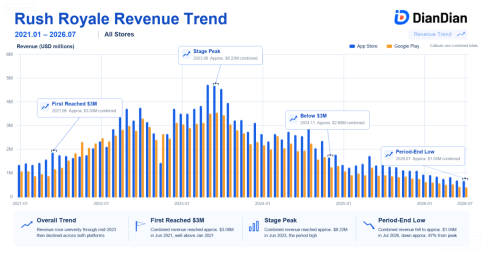
The gameplay subsequently attracted many imitators. MY.GAMES followed the Random Dice formula with Rush Royale, which launched in October 2020 and then grew rapidly, soon establishing itself in Europe and the United States. It peaked at US$8.22 million in June 2023, equivalent to about RMB 55.91 million, before gradually declining.

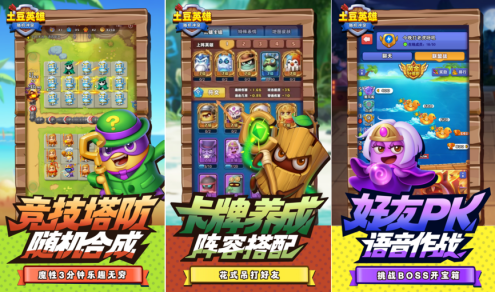
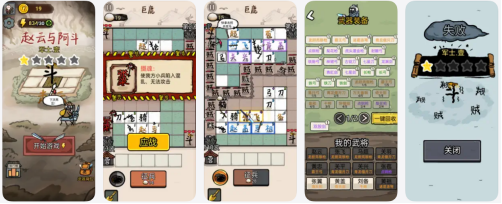
China has also produced successful examples. Random Clash: Potato Hero, released as a WeChat mini game in China in June 2020, surpassed RMB 10 million in first-month revenue after its app version officially launched in July 2021. Even this June, Zhao Yun and Adou, which replaces dice with Chinese characters and summons generals by merging characters such as 'Zhao' and 'Yun,' quickly topped Douyin's popular and grossing mini-game charts, further demonstrating the formula's long-term vitality.


In contrast to the frequent success of imitators, after Random Dice became a hit, 111% continued expanding its dice universe with titles such as Random Dice: Wars, Random Dice: GO, and Randomdice: RollRoll, but none reproduced the market heights of the original.
Therefore, Random Dice 2 means more than simply 'an old IP getting a sequel.' It is more like 111% returning to the gameplay origin it knows best and trying to answer a more important question: when a classic formula has already been repeatedly validated by the market, can its inventor make it big again through a sequel? So what is Random Dice 2's current testing cadence? What has changed compared with the original? How has the market responded so far? And why does 111% need it so badly? Diandian Chuhai analyzes each question below.
01
Initial Traction in a Five-Market Debut, Starting With Traditional Strongholds
Rapid Chart Climb After Testing Began, but Breakout Potential Remains Unproven
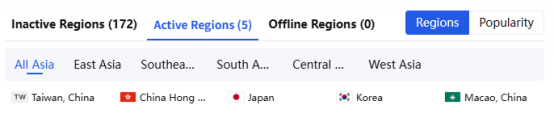
Diandian data shows that in early to mid-June this year, Random Dice 2 appeared on both major platforms in selected countries and regions. At almost the same time, the game began small-scale external user acquisition. It later promoted an upcoming 'global launch,' but did not actually open all markets at once.

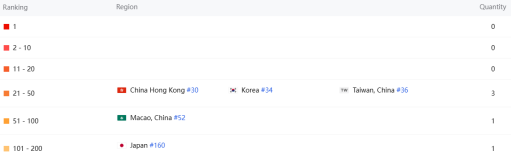
On August 13, the title officially began testing in five regional markets: Hong Kong, China; Macao, China; Taiwan, China; Japan; and South Korea. This was a regional launch focused on 111%'s traditional strongholds. On the same day, it reached No. 1 on South Korea's iOS free-games chart, No. 5 in Taiwan, China, and No. 43 in Japan. At present, it remains in the top 10 in the other four markets, with Japan at No. 70, and has also entered the iOS games grossing chart at No. 34 in South Korea and No. 36 in Taiwan, China.


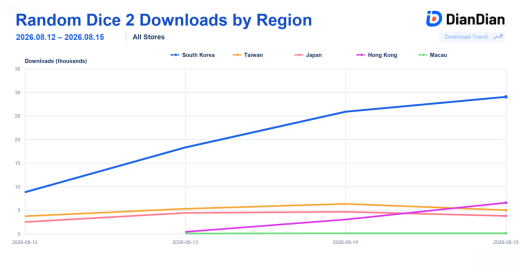
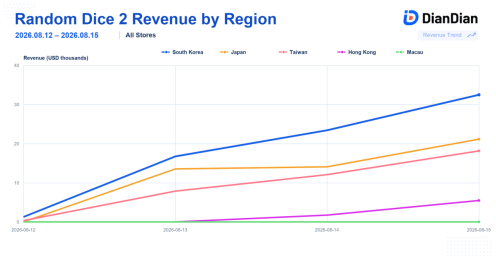
In specific market data, the game opened pre-downloads one day early on August 12 and recorded 15,000 downloads that day. Daily downloads rose to 28,000 on launch day, corresponding to US$38,300 in revenue, equivalent to about RMB 276,000. Both metrics then began climbing slowly. Current daily downloads are around 44,000, while daily revenue is about US$77,000, equivalent to roughly RMB 520,000.

To date, after three days of testing, the title has accumulated about 130,000 downloads. South Korea, Taiwan, China, and Japan rank as the top three markets, contributing 64.42%, 15.94%, and 11.8%, respectively. Total revenue is estimated at around US$170,000, equivalent to about RMB 1.14 million, with South Korea, Japan, and Taiwan, China ranking as the top three at 43.79%, 28.96%, and 22.74%, respectively.

It is worth noting that although Random Dice 2 is currently available in only five regional markets, it already supports eight languages: Korean, Japanese, English, Simplified Chinese, Traditional Chinese, German, Spanish, and French. This indicates that 111% has already prepared localization for subsequent market expansion. This testing round appears intended to first use core users in Japan, South Korea, Hong Kong, China, Macao, China, and Taiwan, China to validate retention, monetization, and competitive balance before determining the pace of global rollout.
Overall, the game's downloads and revenue grew over its first three days, and the classic IP quickly secured some chart exposure. However, current data is not enough to prove that the model has worked, although this is directly related to restrained user acquisition. Guangdada data shows that the title is currently advertising on only one platform and has just 449 deduplicated ad creatives over the past 30 days. Moreover, for a product emphasizing fairness, competition, and long-term deck building, subsequent word of mouth, matchmaking health, and update cadence will be more critical.

Image source: Guangdada
02
From Random Gacha to the Dice Tree
Random Dice 2 Rebuilds Its Meta-Progression
Although current market data has not yet shown a clear trend, Random Dice 2 has made substantial adjustments to the content experience to achieve differentiation and support long-term development.
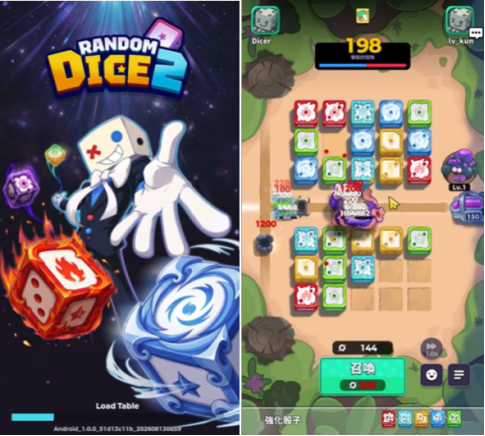
The game has no complicated backstory and still revolves around an abstract dice battlefield. Compared with the original's relatively simple flat presentation, the sequel noticeably raises the visual standard: dice, boards, and monsters are now rendered in 3D, while projectile effects and merge feedback are richer.

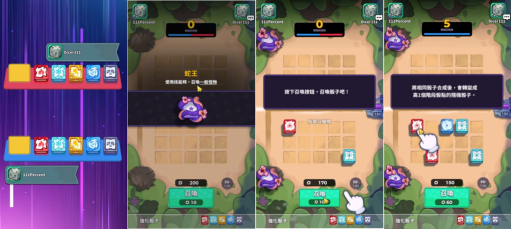
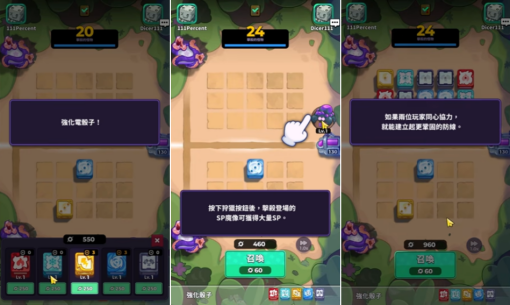
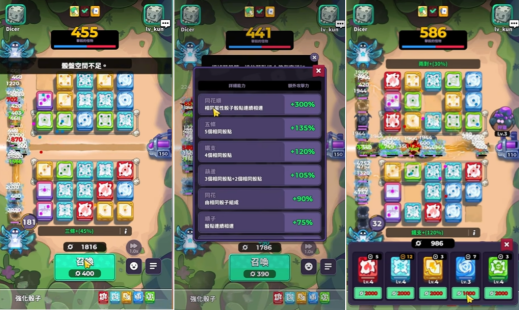
After entering the game, players first learn the controls through cooperative PvE. Each side has a 15-tile board. Defeating monsters grants SP, which is then spent to randomly summon dice from a preset deck, with the summoning cost continually increasing. Dice attack automatically and serve roles such as sustained damage, area damage, control, poison, or SP production. Players can also spend SP to enhance a particular dice type. Two dice of the same type and pip count can merge into a new die with a higher pip count, but its type is rerolled randomly. Thus, while merging can increase the power of an individual unit and free board space, it also reduces the number of units on the field and may even disrupt an established combination.


Players must constantly choose among summoning, upgrading, and merging. When firepower is insufficient, repeated merging may rapidly thin the defensive line; when the board is nearly full, merging becomes necessary to create space. Managing resources, board density, and random outcomes remains the sequel's central source of strategy.

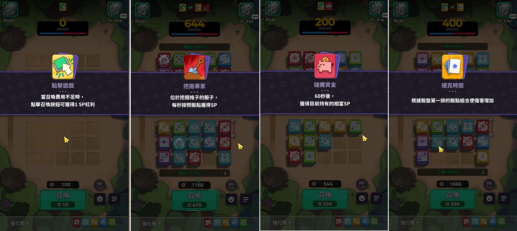
The sequel's first adjustment is an expansion of battlefield rules. Cooperative matches gradually introduce new random effects at the start and after boss rounds, changing SP supply, special tiles, starting dice, formations, or damage conditions. Players can no longer develop their decks in a fixed order, but must adjust positioning, merging, and resource use according to the rules of each match.

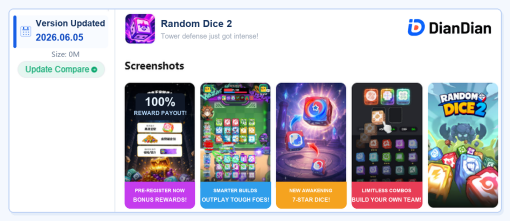
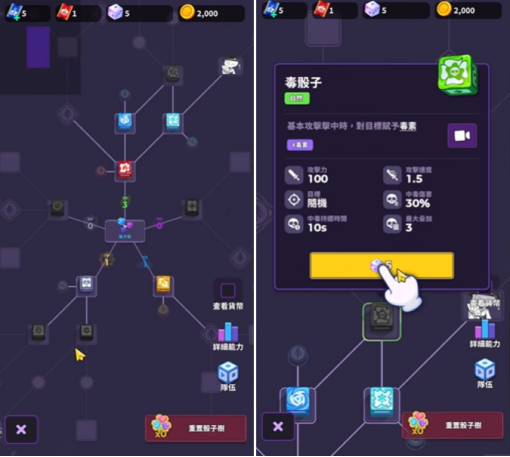
The larger change occurs in meta-progression. The game removes the original's method of randomly obtaining dice through chests and fragments and instead uses the 'Dice Tree' for unlocking and progression. The Dice Tree is divided into five paths: Nature, Order, Chaos, Engineering, and Magic. By investing coins and Dice Cores, players follow different branches to unlock new dice, strengthen mechanics, and open Supporters, thereby deciding their long-term development direction in advance.

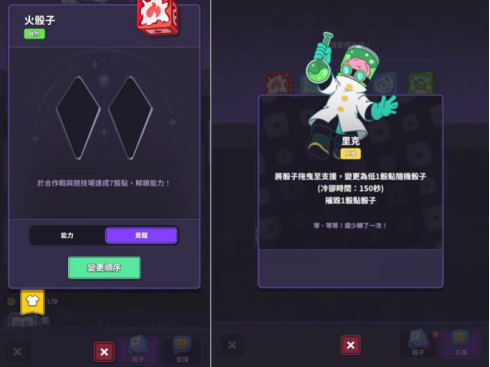
When an in-match die reaches seven pips, it also triggers a unique awakening ability, granting the high-pip die a new skill effect. Supporters act as active intervention tools outside the deck, allowing players to discard dice, change dice types, or influence the battle line, providing limited opportunities to correct a board that has gone out of control.

Overall, Random Dice 2 has not eliminated 'luck' as its promotional messaging claims. Random summons, random merge outcomes, bosses, and battlefield rules remain. What it actually removes is gacha from the dice-acquisition stage, while the Dice Tree, seven-pip awakenings, and Supporters give players more agency.
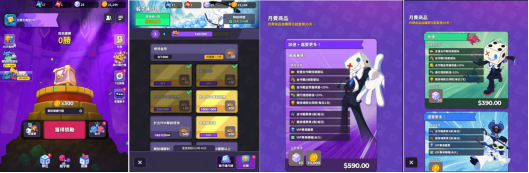
The original placed both deck completion and in-match decisions at the mercy of probability. The sequel first lets players determine a long-term archetype through the Dice Tree, then uses summoning, merging, and battlefield rules to create variation in every match. This does not mean Random Dice 2 is entirely free of monetization pressure. The store still contains monthly passes, bundles, battle passes, and paid resources, and players can still pay to accelerate progression.

For 111%, Random Dice 2 is not an ordinary IP sequel. As the original enters the latter part of its life cycle, reactivating years of accumulated users and gameplay influence has become a more practical mission for this product.
03
A Revenue Foundation, a Growth Engine, and a Flagship IP
111%'s Product Tiers Are Becoming Clearer
111% was founded in 2015 and initially relied mainly on small teams rapidly producing lightweight games.

After Random Dice broke out in 2019, the company established a clear product identity worldwide for the first time and turned random summoning, merging, and real-time tower defense into core capabilities that it would reuse over the long term.
After Random Dice, however, 111% entered a lengthy cycle of searching for its next hit. Neither dice-IP spin-offs nor test products in other lightweight casual, tower-defense, card, and RPG directions could replicate the original's heights. Revenue declined accordingly, and the company briefly swung from profit to loss in 2023.
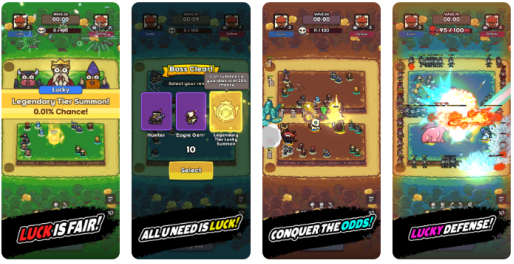
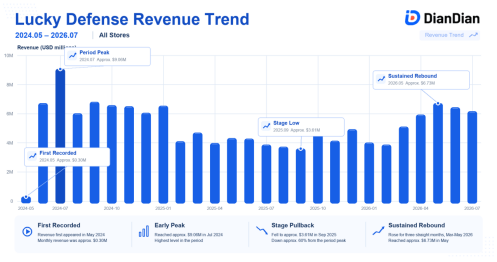
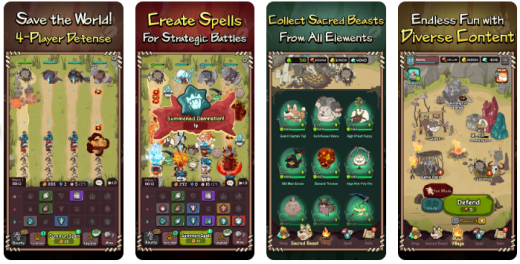
The turning point came in May 2024. Lucky Defense shifted random summoning and merging from one-on-one competition to two-player cooperative tower defense and quickly became a new global hit after launch. Diandian data shows that to date, the title has generated about US$142 million in cumulative revenue, equivalent to roughly RMB 1.021 billion. Monthly revenue in July was still US$6.171 million, equivalent to about RMB 44.43 million, making it 111%'s highest-revenue product at present.


After Lucky Defense broke out, 111% did not slow its testing cadence. In 2024, it successively released products including Rolling Legions, Gun Cat POW!, Balds VS Zombies, and EFWW.
At the beginning of 2025, it then tested a succession of new games including Lucky Offense, Epic Shaman Battle: 4P Defense, Heroll, and Remi Zeros, covering cooperative tower defense, auto chess, roguelike RPG, and card-defense directions.
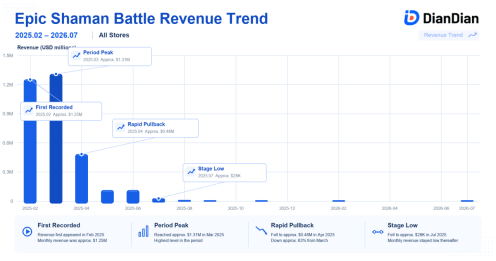
Among them, Epic Shaman Battle generated more than US$1 million in first-month revenue early after launch, but failed to grow further into a long-term product on the scale of Lucky Defense. Most of the other projects also remain in small-scale testing or gameplay-validation stages.


In the first half of this year, 111%'s SuperMagic account intensively tested new games including Aegis: Orbit Defense, Sheep Duck, DeckSquad: +99 Dungeon Cap, Peng Shot, and Duck Out: Loot, Shoot, Escape!, extending from orbital tower defense and deck building to survival shooting and extraction gameplay. Although the product count remains substantial, no new hit capable of succeeding Lucky Defense has yet emerged.
However, these intensive tests were not entirely without exceptions.
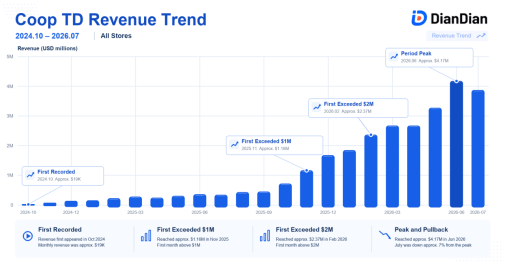
Cooperative tower-defense game Coop TD: Together, launched in October 2024, followed a counter-trend growth curve after a relatively long accumulation period.

Diandian data shows that Coop TD was not large at launch, generating only about US$210,000 in total revenue in 2024, equivalent to roughly RMB 1.51 million. But it began climbing noticeably in the second half of 2025. In November of that year, monthly revenue exceeded US$1 million for the first time, reaching US$1.156 million, equivalent to about RMB 8.32 million. It continued growing thereafter, reaching a monthly peak of US$4.177 million in June this year, equivalent to about RMB 30.08 million. It is currently 111%'s second-highest monthly revenue product after Lucky Defense. Its significance lies in proving that 111% can gradually push a test product up the revenue ladder through long-term iteration.

From this perspective, 111% has now formed relatively clear product tiers: Lucky Defense maintains the revenue foundation; Coop TD serves as the second growth engine; numerous small-team projects continue searching for new gameplay; and Random Dice 2 uses the company's best-known IP to bet on a larger market.