文
A

Puzzles & Survival still generates US$28 million in monthly revenue, while Last Asylum recently launched in Hong Kong, China, Macao, China and Taiwan, China. Backed by two hit references, Shelter Days recorded nearly 200,000 downloads in its first 10 days of testing.
Within 37 Interactive Entertainment's current overseas SLG portfolio, the two most eye-catching products, and the ones most worth discussing, are essentially Puzzles & Survival and Last Asylum: Plague.
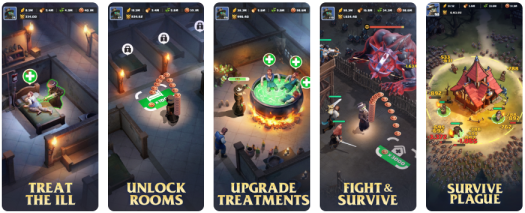
The former combines a zombie theme, match-3 combat and an SLG framework, building a long-term curve that has remained stable for nearly six years. The latter differentiated itself through a Black Death theme and shelter management, rapidly scaling this year to become a representative title in 37's latest overseas growth cycle; it has also recently launched officially in Hong Kong, China, Macao, China and Taiwan, China.
Recently, 37 Interactive Entertainment launched another new game called Shelter Days: Survival, merging the validated core ideas of these two products.

So is this fusion merely a reassembly of existing content, or can it form a new and effective experience? What exactly does its gameplay look like? What is its testing pace? And how is the test data performing? DianDian Global will break it down and analyze it below.
01
Shelter Days Recombines Shelter, Match-3 and SLG Elements
A New Fusion Path Has Taken Shape, with Nearly 200,000 Downloads in 10 Days of Low-Volume Rollout
Public information shows that Shelter Days was first exposed on official social channels in early July, while small-scale creative advertising began around the same period. Over the past 30 days, it had about 244 deduplicated ad creatives, indicating a low-volume state.

Image source: Guangdada
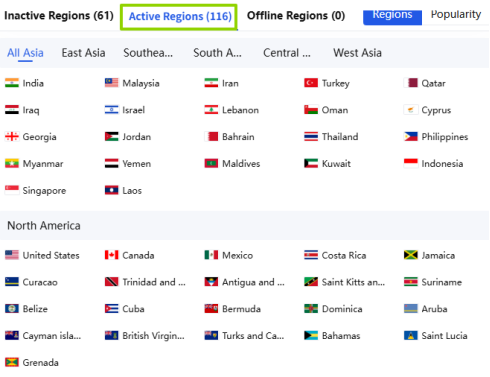
According to DianDian Data, Shelter Days gradually began listing on Google Play in various countries and regions from mid-July. It has now launched in nearly 116 regional markets, excluding Hong Kong, China, Macao, China, Taiwan, China, Japan and South Korea.


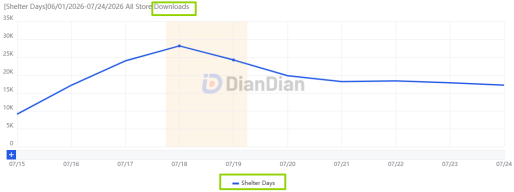
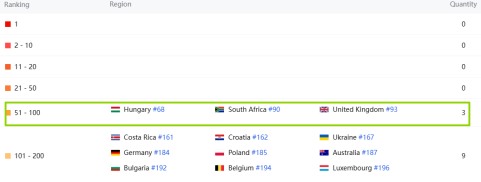
On July 15, the game generated its first trackable market data. In terms of downloads, first-day downloads were around 9,000, then continued to rise until reaching a daily download peak of 28,000 on July 18 before slowly declining. Current daily downloads are around 17,000, and the game has entered the Google Play free games Top 100 in Hungary, South Africa and the United Kingdom.

Shelter Days download trend since testing began

Shelter Days' position on the global Google Play free games chart on July 27
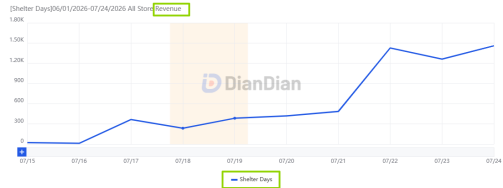
In terms of revenue, first-day revenue was only in the double digits. It grew afterward, but at a slow pace, and did not break four digits until July 22. Current daily revenue is around US$1,500, equivalent to roughly RMB 10,000.

Shelter Days revenue trend since testing began
As of now, after 10 days of testing, cumulative downloads are around 194,000. The Philippines, Indonesia and the United States rank as the top three download markets, contributing 15.05%, 14.82% and 13.52%, respectively. Total estimated revenue is around US$6,000, equivalent to roughly RMB 41,000, with the United States, Germany and Australia ranking as the top three revenue contributors at 27.05%, 14.86% and 7.9%, respectively.
Next, let us return to the game itself.
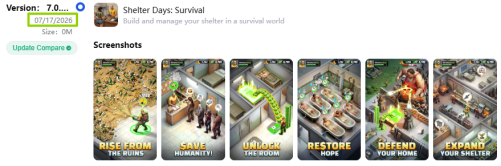
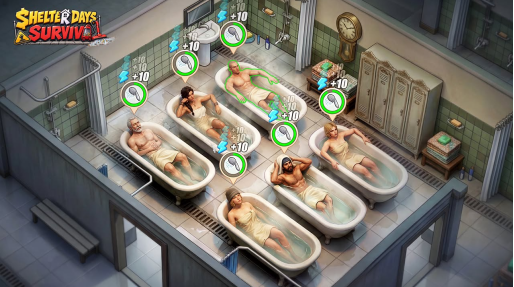
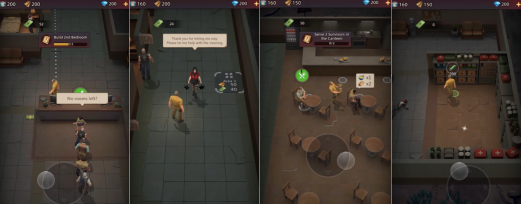
Although Shelter Days uses the common post-apocalyptic zombie theme, its early narrative focuses on rebuilding a community around a shelter. Visually, it adopts an overhead oblique-angle perspective, with characters and buildings presented in a semi-realistic cartoon style, giving the overall look the texture of a Western post-apocalyptic comic.

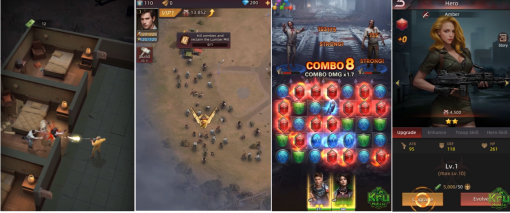
In terms of gameplay framework, it can be summarized as debris clearing + shelter management + survivor management + match-3 combat + hero development + SLG. In the early stage, it absorbs the Last Asylum-style rescue, accommodation and management packaging, making the SLG entry experience lighter and more intuitive. In the mid-to-late stage, it continues the match-3 combat + long-term SLG structure validated by Puzzles & Survival.
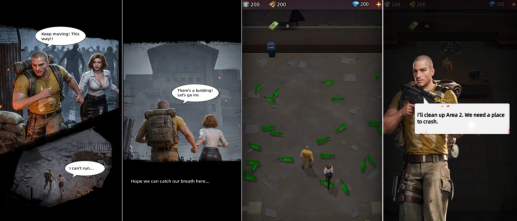
At the beginning of the game, a comic quickly explains the setting: after a zombie catastrophe, urban order has collapsed, and a group of survivors find an abandoned building while fleeing and decide to transform it into a new shelter.

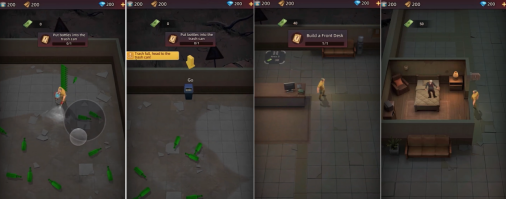
At this point, the player's first task is to control the character as they move inside the building, pick up bottles, clear trash and move supplies, gradually opening new areas through the Clear Area progress bar.

After basic clearing is completed, shelter management and survivor management gradually unfold. Players need to repair functional areas such as the front desk and bedrooms, organize beds and furniture, then accept survivors seeking refuge and assign them rooms. The number of beds directly limits the population that can be accommodated. When more people are waiting in the lobby but no rooms are available, players must continue clearing areas and expanding bedrooms.

As the population increases, restaurants and production facilities are also unlocked one after another. Players need to prepare food, assign survivors to different posts and meet residents' daily needs. A larger population provides more labor for the shelter, but also consumes more beds and food, pushing players to continue expanding facilities and improving output. This creates a relatively clear management relationship among population, rooms and resources.
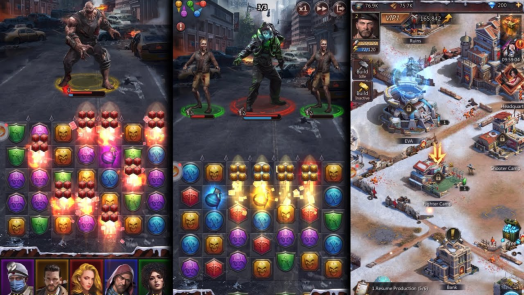
After about eight minutes, the game transitions into match-3 combat. Players lead a hero squad against zombies, with red, blue, green and other colored icons distributed across the board. Matching triggers damage, combos and skill releases. The combat itself is not especially new, but its role in the loop is clear: clearing external pressure brings resources, and those resources continue to support shelter construction, hero development and further exploration.

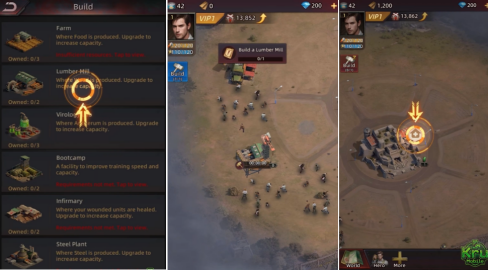
Later, the SLG sandbox begins to appear. The external map features zombies, vehicles, resource points, and production buildings such as farms and lumberyards. Players can clear enemies, build facilities, obtain output and bring resources back to the shelter. The early game is about clearing rooms; the mid-to-late game becomes outward expansion, ultimately returning the product to the long-term strategy framework familiar to 37.

Overall, the design focus of Shelter Days is not the novelty of any single gameplay component, but the rearrangement of the player's path into an SLG. It first uses debris clearing, room repair and survivor intake to establish short feedback, then uses beds, restaurants, jobs and resource production to create management pressure, before connecting to long-term content such as match-3 combat, hero development, external maps and alliances.
At present, the game should still be in an early scaling and market-validation stage. Its early-stage packaging is already relatively clear. The key question is whether it can smoothly convert the lightweight shelter-rebuilding experience into the retention, payment and social depth required by mid-to-late-stage SLGs. If this chain works, it will be more than a simple gameplay splice; it will be another validation of 37's new fusion model.
02
Puzzles & Survival Shows Strong Long-Term Capability, Still Generating US$28 Million in Monthly Revenue
Last Asylum's International Version Stably Exceeds RMB 100 Million in Monthly Revenue, While Its Hong Kong, Macao and Taiwan, China Launch Starts Low and Awaits Scaling
Looking outward from Shelter Days, it is worth turning back to 37's existing overseas SLG product lineup. After all, this new game is worth discussing separately not only because it combines several gameplay modules, but also because it stands behind two reference samples: Puzzles & Survival and Last Asylum. One validates 37's long-term operating capability in SLG; the other validates new-product breakout capability amid changing trends.
So where are these two products now, and what results have they achieved? These have become important references for 37's subsequent products.
First, let us look at the more recent Last Asylum. As 37 Interactive Entertainment's new hit from the first quarter of this year, it has continued to grow by relying on the new combination of Black Death theme + idle arcade + simulation management + SLG. Its revenue has still shown no sign of decline so far, with June revenue of around US$15.2 million, equivalent to roughly RMB 103 million, making it a target that major overseas SLG publishers are eager to imitate.

What deserves even more attention, however, is that on July 23, the game officially launched in Hong Kong, China, Macao, China and Taiwan, China under the title 醫起救世界:鼠裡逃生. On the same day, it rose to the iOS free games Top 3 in Taiwan, China and Macao, China, and Top 4 in Hong Kong, China.

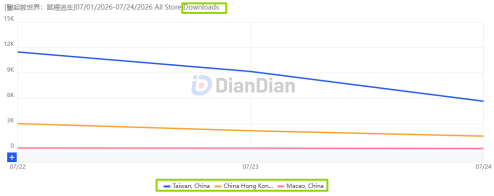
In terms of downloads, the game opened pre-downloads one day early and recorded 15,000 daily downloads that day. On the first day of public beta, downloads fell to 12,000, then reached around 7,500 the next day. After two days of testing, cumulative downloads were around 34,000, with Taiwan, China contributing as much as 78.86%.

Download trend of 醫起救世界:鼠裡逃生 since launch
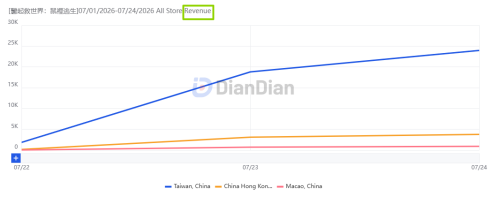
In terms of revenue, first-day revenue was around US$23,000, equivalent to roughly RMB 150,000, and increased to US$29,000, equivalent to roughly RMB 190,000, on the second day. Total revenue over the first two days reached RMB 360,000, with Taiwan, China contributing about 83.71%.

Revenue trend of 醫起救世界:鼠裡逃生 since launch
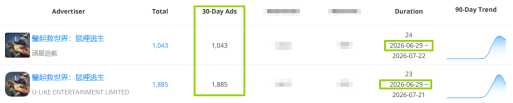
Strictly speaking, this data performance is not entirely reasonable. The reasons may be, first, that traditional Chinese-language markets have relatively limited acceptance of the Black Death theme, and core packaging such as plague treatment has not fully converted into local users' download and payment interest. Second, there is a certain gap in publishing actions and advertising intensity. Although the official team invited Ethan Juan to serve as the spokesperson for Hong Kong, China, Macao, China and Taiwan, China and combined this with offline ground promotions to expand exposure, the advertising side has never shown obvious scaling. Over the past 30 days, the deduplicated creative counts across both platforms were below 2,000, and overall ad volume is still trending downward.


Overall, the international version has already proven the product's ability to attract users and commercialize. Therefore, the current low opening of the Hong Kong, Macao and Taiwan, China version does not fully indicate that the product is unsuitable for these markets. If the official team further increases advertising and makes more refined adjustments in theme packaging, localization expression and live-ops activities, its performance remains worth continued observation.
Turning to Puzzles & Survival, its gameplay combines match-3 combat, a zombie theme and an SLG framework. It uses intuitive levels and hero growth to carry the early experience, then expands later depth through base building, alliance social systems, the world map and long-term operations.


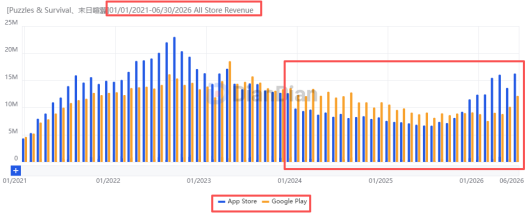
The game launched in the second half of 2020 and remained in a growth phase for more than three years afterward. Monthly revenue reached US$34.8 million, equivalent to roughly RMB 261 million, in September 2022. It was not until 2024 that revenue data began to show a downward trend, but the overall pace of decline has been very slow, and version updates and events can still quickly lift performance. In the most recent month, its revenue remained at US$28 million, equivalent to roughly RMB 190 million.

Puzzles & Survival dual-platform monthly revenue trend since launch
As of now, the game has been operating for six years and is almost the most representative successful case on the match-3 + SLG route. Cumulative revenue is estimated to exceed US$1.6 billion, equivalent to roughly RMB 10.9 billion, with the United States, Japan and South Korea ranking as the top three markets at 37.75%, 32.17% and 6.79%, respectively.
Its long-term success is due not only to its early gameplay differentiation, but also to considerable effort on user acquisition and operations. On the UA side, it uses AI to reduce creative material costs to one-tenth of traditional methods, improve production efficiency by 3 to 5 times, and increase advertising ROI by 15% compared with 2025.
On the operations side, it continues to optimize version experiences in core markets such as Europe, the United States and Japan, while matching IP collaborations to different regions and constantly adding new content and topics to the product. Examples include Transformers, Resident Evil and The Walking Dead for the global market; A Better Tomorrow for Hong Kong, China, Macao, China, Taiwan, China and Southeast Asia; and Godzilla for Japan.

Viewed together, these two products are at different stages, but both are expanding strongly in their respective directions. Last Asylum is testing the upper limit of new products and cross-market scaling capability, while Puzzles & Survival is strengthening long-term maintenance capability. Together, they form the basic moat of 37's overseas SLG business.
03
From Chest Opening, Simulation Management and Extraction-Lite to SLG
37 Is Especially Skilled at Breaking Down and Reusing Successful Gameplay Loops
Through the iteration of the three SLG products above, it is easy to see that 37 Interactive Entertainment rarely bets on only one product. It is skilled at breaking down the underlying loops of products that have already worked into reusable modules, then using themes, art direction and worldviews to cover different markets and user segments.
Previously, after the model of opening chests to draw equipment, stacking combat power and pushing through stages became popular, 37 successively launched products such as Xun Dao Da Qian, Soul Land: Shrek Academy, Nobody's Adventure Chop-Chop and Hero Clash. In the simulation management direction, after Call Me a Big Shopkeeper, it launched Time Big Bang and Time Grocery Store, placing management growth into civilization evolution and nostalgic street-life themes, respectively. 33 Days to Survive validated the combination of rumble-like gameplay + lightweight extraction, and Zhen Xie Ren was then brought to market under a Chinese micro-horror and dungeon exorcism package.


Therefore, what is truly worth watching about Shelter Days is not only its short-term test data, but whether 37 can once again break down the validated experience from Puzzles & Survival and Last Asylum into a new product combination. Can this product engineering approach of light entry + heavy long-term content continue to hold under new theme packaging? If subsequent scaling, retention, and mid-to-late-stage social monetization can connect, it may become another incremental attempt within 37's overseas SLG portfolio.