文
A
In recent years, the overseas digital credit industry has been shifting from competition around standalone lending products to competition in integrated financial services centered on user accounts and consumption scenarios.
Early digital lending platforms mainly acquired users through fast approvals and small-ticket cash loans. However, as regulatory environments change, customer acquisition costs rise, and user lifetime value becomes the core of competition, the industry's focus is moving from "how many loans can be issued" to "how to build long-term financial relationships around users."
The model that combines account systems with credit capabilities is becoming an important growth direction for overseas fintech platforms. As a leading digital financial platform in Latin America, Mercado Pago is one of the most representative examples of this trend.
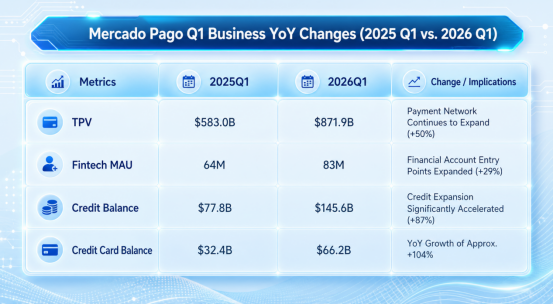
According to Mercado Libre's first-quarter 2026 financial report, the company's fintech business continued to grow rapidly: total payment volume, or TPV, increased 50% year on year, the loan portfolio grew 87% year on year, and Fintech MAU reached 83 million, setting another historical record.
As the H1 reporting window approaches, the capital market's focus is changing. Investors are no longer only asking whether Mercado Pago can continue expanding its user base and loan scale, but are paying more attention to the following questions:
Can high-speed growth translate into stable profitability? Will credit card expansion create new risk pressure? Can regional markets absorb such aggressive expansion?
Like three exam papers, the market is waiting for Mercado Pago's answers as it moves from "scaling up" to "validating quality." The outcome will also become an important window for observing the next stage of development in the overseas digital credit industry.
I. Why Mercado Pago Represents the Next Stage of Overseas Credit
In the past, the development logic of the overseas digital lending industry was relatively simple:
Acquire users quickly through low-threshold lending products, then rely on scale expansion to drive revenue growth.
This model remains effective in some emerging markets, but as competition deepens, relying solely on short-term cash loans is becoming increasingly insufficient for building long-term competitive advantages.
By contrast, platforms represented by Mercado Pago embody another paradigm:
First build an integrated account system, a process that often takes a longer cycle, and then continuously increase user value through payment and consumption scenarios.
The reason this model is solid lies in its core logic: loans are no longer isolated products, but one link within the broader ecosystem.
Mercado Pago initially built up accounts and transaction data through businesses such as Mercado Libre's e-commerce ecosystem and offline QR Code acquiring. It then layered on financial products including consumer credit, merchant loans, and credit cards to increase user lifetime value.
Compared with the traditional cash-loan model, this ecosystem-based financial platform has three advantages:
First, payment and transaction data provide richer inputs for risk assessment. User consumption frequency, transaction amounts, and scenario information all help the platform improve credit evaluation capabilities.
Second, the account system strengthens user stickiness. As payments, consumption, and financial services increasingly concentrate on the same platform, user switching costs rise accordingly.
Finally, the credit business and the payment ecosystem can form a positive cycle. Higher credit limits promote consumption growth, while more transaction data further strengthens the platform's financial service capabilities.
II. Scale Growth Remains Strong, but the Growth Drivers Are Changing
Looking further at the business structure, Mercado Pago set new historical highs across multiple indicators in the first quarter of 2026.

Q1 data provides a baseline reference for whether quality can be delivered in the H1 report, with the lending business standing out in particular.
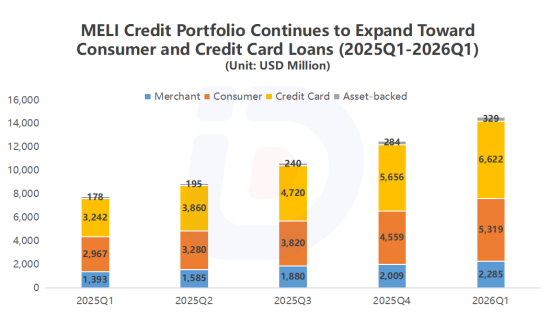
From the first quarter of 2025 to the first quarter of 2026, the company's loan portfolio increased by more than US$6.7 billion. Among this, credit card balances more than doubled, and their share of the overall loan portfolio rose from 41.7% to 45.5%.

Consumer credit remains an important foundation for Mercado Pago's loan portfolio expansion, while the credit card business is becoming a key driver of incremental loan growth.
Diandian Data believes that from a long-term business logic perspective, Mercado Pago is further strengthening its consumer finance ecosystem. Credit cards not only generate lending revenue, but also increase user consumption frequency, payment activity, and account value, deepening the platform's financial services.
At the same time, however, the credit structure's tilt toward consumer finance implies higher risk management requirements. As the growth driver shifts from consumer credit to credit cards, the platform is entering a critical stage in which growth quality must be verified through profitability and risk data. This is also the core focus of the H1 report.
III. Core Focus of the H1 Report: Can Growth Quality Be Delivered?
1. Whether Net Interest Margin Stabilizes
The biggest market concern around Mercado Pago at present is pressure on profitability.
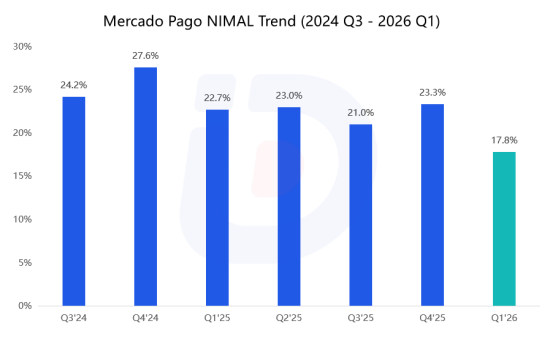
In the first quarter of 2026, the company's net interest margin after losses, or NIMAL, fell from 22.7% in the same period of 2025 to 17.8%, a decline of nearly 5 percentage points.

Although the loan portfolio is growing rapidly, yields in the credit business are under temporary pressure. According to information from the Q1 earnings call, the decline in NIMAL mainly came from changes in the credit portfolio structure and upfront cost pressure during the expansion stage.
First, the share of the credit card business is increasing rapidly. Credit cards are an important product for Mercado Pago to build long-term financial relationships, but in the early stage of business expansion, the company must provision in advance for potential losses, while interest income is gradually released as users spend and accumulate balances. As a result, returns face short-term pressure.
Second, the company has proactively extended the terms of some loans in order to expand user financing scale and enhance long-term credit value. However, longer durations mean higher initial reserve requirements and also increase risk factors such as early repayment.
Third, the company is still in the expansion stage of its financial ecosystem. It is broadening user relationships by building digital accounts, payment infrastructure, and credit capabilities, which also means short-term profitability is giving way to long-term growth goals.
Therefore, current margin pressure cannot simply be equated with deteriorating asset quality. It is more like a phase of active investment that Mercado Pago is undertaking as it upgrades from a payment platform to an integrated financial platform.
For the capital market, however, the core question remains: can these investments ultimately translate into higher user value and profitability?
If the H1 report shows that NIMAL has stabilized or even rebounded, the market will likely view earlier credit expansion and product investment as beginning to enter a phase of revenue release. The logic of profitability validation would stand, and room for valuation recovery could open up. If NIMAL continues to decline, it would mean the phase of "trading profit for growth" is still ongoing, and the market's timeline for validating credit quality and a profit inflection point would be pushed further back.
2. Whether Credit Expansion Brings Risk Pressure
As of the first quarter of 2026, the company's overall asset quality remained stable: 15-90 day overdue NPL edged down by only 0.2 percentage points to 8%, while the provision coverage ratio slipped slightly by 0.2 percentage points but remained high at 26.2%, leaving sufficient risk buffers.
However, the market is not only focused on current risk levels, because credit risk usually has a lagging effect.
Since 2025, the company's loan scale has grown rapidly, especially with a notable expansion in credit card balances. Therefore, the next few quarters will be an important stage for validating the credit cycle. The H1 report still needs to be watched closely for:
Risk performance among new loan customers;
Migration trends in the credit card portfolio;
Whether provision levels continue to rise;
Whether risk costs erode profit.
If the H1 report shows stable risk performance among new loan customers, normal migration in the credit card portfolio, and provision levels that remain aligned with changes in risk, the market will likely conclude that current credit expansion remains within a controllable range, further validating Mercado Pago's logic of upgrading from a payment platform to an integrated financial platform.
Conversely, if delinquency rates continue to rise, risk costs significantly erode profit, or provision growth fails to cover changes in asset quality, it would mean the returns from credit expansion have not yet fully offset risk costs, and the market may reassess the quality of its growth.
IV. Country Layout
Although Mercado Libre operates across multiple Latin American markets, the future pace of growth will mainly be determined by Brazil, Mexico, and Argentina.
1. Brazil: The Current Core Battlefield
In the first quarter of 2026, about 54% of the company's revenue came from Brazil.
Brazil has the largest user scale and is also the most mature market for financial products such as credit cards, Open Finance, and wealth management.
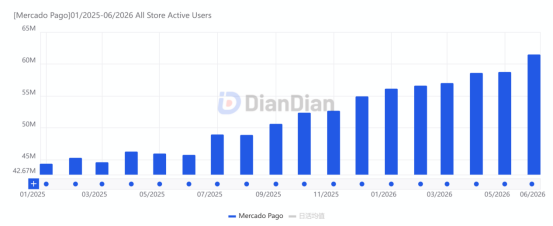
According to Diandian Data monitoring, as of June 2026, Mercado Pago's monthly active users in Brazil reached 61.499 million, up 34.4% year on year, adding more than 15.735 million users over the past year.

At the same time, however, the Brazilian market has already entered a more mature stage.
Diandian Data believes that as user scale continues to expand, Mercado Pago in Brazil is gradually entering a new stage of transition from "scale growth" to "deeper user value extraction."
Future competition will no longer be only about expanding the number of users, but about improving account activity, financial product penetration, and contribution value per user.
2. Mexico: A New Growth Curve Is About to Take Shape
Compared with Brazil, Mexico is still in the stage of improving digital finance penetration. Cash usage remains relatively high in Mexico, and financial account coverage still has room to improve, providing considerable growth space for digital payments and financial services.
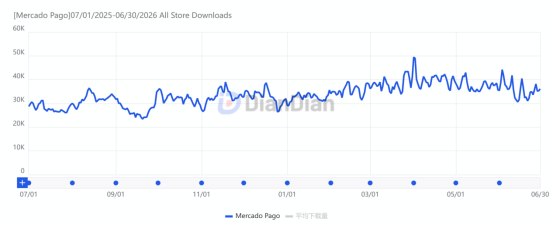
According to Diandian Data monitoring, Mercado Pago's performance in Mexico shows that user acquisition is still only relatively stable.

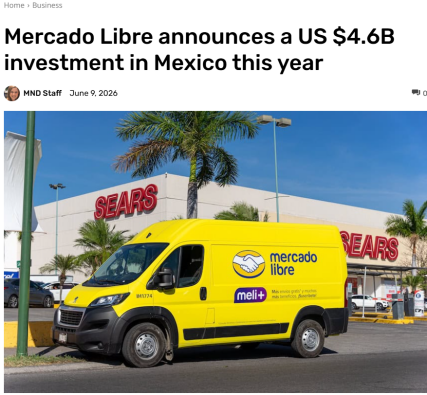
Fortunately, the company is stepping up its moves. In June 2026, Mercado Libre announced that it would invest approximately US$4.6 billion in Mexico, with key areas including logistics, technology, and Mercado Pago financial services, while continuing to advance its banking license efforts.

https://mexiconewsdaily.com/business/mercado-libre-announces-4-6-billion-investment-mexico/
If it obtains a more complete financial license in the future, Mercado Pago is expected to further expand into savings, payroll accounts, and broader credit services.
For the capital market, Mexico represents not only revenue growth, but also an important opportunity for Mercado Pago to evolve from a payment platform into a more complete digital financial services system.
Compared with Brazil, which has entered a stage of deeper operations, Mexico still has stronger user expansion potential. Its future value lies more in the long-term growth space after financial infrastructure is further improved.
3. Argentina: Ecosystem Value in a High-Penetration Market
Argentina is one of the earliest core markets for Mercado Libre and Mercado Pago, and it is also one of the Latin American markets with relatively high penetration of digital payments and financial services.
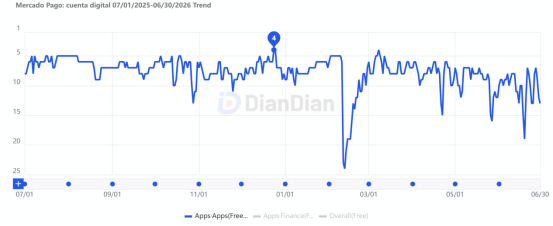
However, affected by macroeconomic volatility, Argentina's growth environment is relatively complex. Taking the Google Play market as an example, Mercado Pago's ranking fluctuations increased in the first half of 2026, moving between No. 4 and No. 23.

Compared with Brazil and Mexico, Argentina's strategic significance for Mercado Pago lies more in deepening the user ecosystem and maintaining regional positioning. As one of the company's core markets, Argentina plays an important role in consolidating the user base and improving the financial ecosystem.
From a regional layout perspective, Mercado Pago is entering a stage in which "deep cultivation in mature markets" and "expansion in high-potential markets" run in parallel. Brazil focuses on profitability and operating efficiency, Mexico carries growth potential, and Argentina plays the role of ecosystem consolidation and strategic positioning. How to balance scale growth with operating efficiency will become an important point for observing growth quality in the next stage.
From the perspective of the H1 report, operating pressure reflected by changes in the user experience in Brazil, as well as the pace at which growth is delivered after large-scale investment in Mexico, will be important signals for judging differences in regional growth quality. Regional segment data deserves close attention.
Conclusion: Mercado Pago Is Entering the "Quality Validation Stage"
Over the past few years, Mercado Pago has proven that a digital financial platform can use payments as an entry point to expand user scale, and continuously increase user value through account systems, payment services, and credit products.
But as the business scale enters a new stage, the market's focus is also shifting from "whether it can grow" to "whether it can continue creating value." As an important growth engine for Mercado Libre's financial business, Mercado Pago's performance will also be a core focus of the market in this MELI H1 report.
Specifically, the market will focus on three aspects: first, whether credit scale expansion can further translate into profitability improvement; second, whether credit card growth can expand financial value while keeping risk costs controllable; and third, whether new markets such as Mexico can replicate the platform's ecosystem advantages and achieve scaled growth.
If Mercado Pago can complete its transition from a "payment-entry platform" to a "sustainably profitable digital financial ecosystem," its long-term growth logic and valuation upside are still expected to strengthen further.
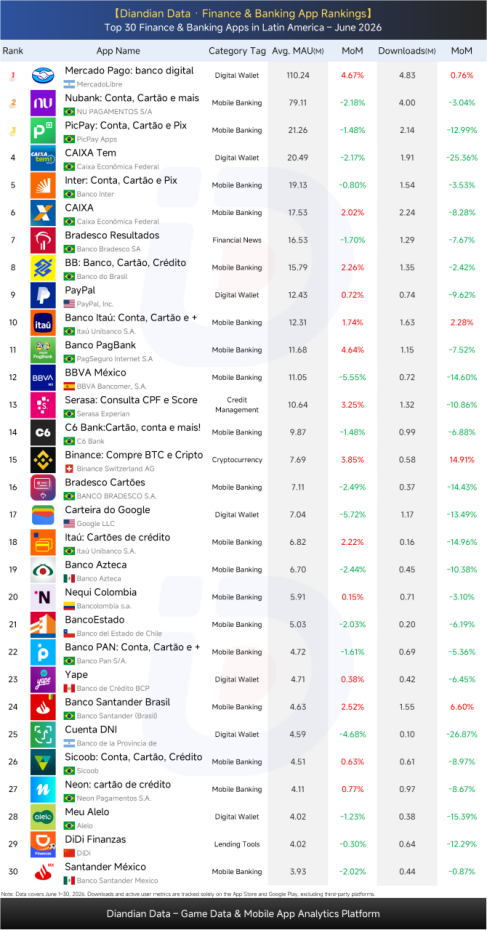
Appendix: June Top 30 Financial Apps in Latin America