文
A
In the second quarter of 2026, Mexico's economy warmed up compared with the first quarter, with economic activity showing signs of gradual stabilization.
According to the latest data released by Mexico's National Institute of Statistics and Geography (INEGI), the Global Indicator of Economic Activity (IGAE) increased 1.2% month over month and 2.2% year over year in April, creating an important starting point for economic recovery in the second quarter.
Although IGAE edged down 0.3% month over month in May, the indicator is expected to rebound again after entering June, supported by strong performance in core areas such as the service sector, with an estimated month-over-month increase of 0.2%. Overall, Mexico's economy continued to follow a moderate and sustained improvement trend.
Focusing on the cash loan market, macroeconomic stabilization has provided key support for the recovery of household consumption and the release of short-term cash turnover demand. However, because real improvement in household income and cash flow repair still require a certain cycle, the current recovery in market demand shows a lagging pattern.
Supported by marginal improvement in the consumption environment and residents' short-term cash turnover needs, Mexico's cash loan app market in Q2 2026 has begun to release signs of recovery.
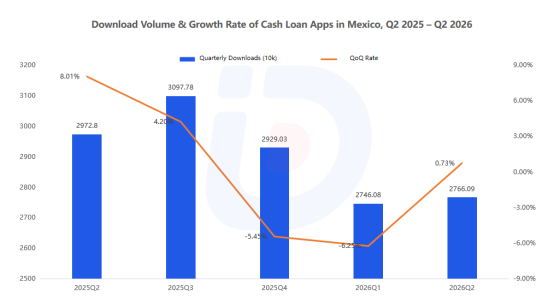
Market Size: Cash Loan App Downloads Rebound from the Bottom, Up 0.73% QoQ
According to DianDian Data monitoring, cash loan app downloads in Mexico reached 27.6609 million in Q2, up 0.73% quarter over quarter, ending the previous two consecutive quarters of decline.

DianDian Data believes that the slight recovery in downloads in Q2 was broadly synchronized with the marginal improvement in the macro consumption environment. Looking at the transmission from macro factors to the micro lending market:
- Lower inflation improved consumption expectations: Mexico's annualized inflation rate fell from 4.45% in April to 3.37% in June. As price pressure eased, residents' willingness to consume gradually recovered, providing some support for short-term credit demand.
- Lower interest rates improved the credit supply environment: As the benchmark interest rate was gradually reduced to 6.50%, funding costs for financial institutions declined, improving the funding environment for online credit platforms and creating some room for credit product expansion.
Market Landscape: DiDi Finanzas Reaches 4.0292 Million Average Monthly MAU; Aplazo Cumulative Downloads Grow 130.46% QoQ; PrestamoClaro Climbs 12 Places in One Quarter
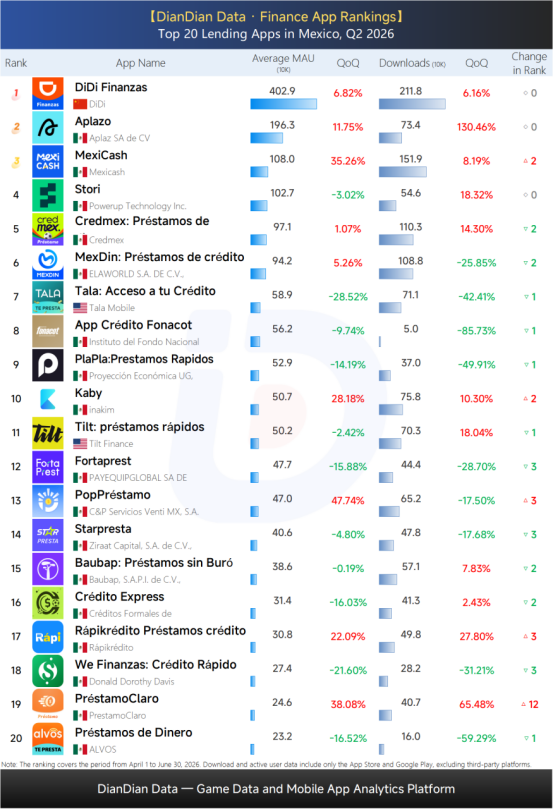
While market size rebounded from the bottom, incremental traffic showed different performance across platforms. Leading platforms continued to maintain scale advantages, while some apps improved their rankings through user growth. DianDian Data monitoring shows that among the Top 20 cash loan apps in Mexico in Q2 2026, 11 apps recorded positive quarter-over-quarter download growth, accounting for more than half of the list. This reflects a recovery in platform user-acquisition activity and improved new-user inflow compared with the previous quarter.
However, among these 11 apps with download growth, only seven achieved simultaneous MAU growth, suggesting that conversion from new users to active scale remains insufficient. User activation and retention efficiency are still bottlenecks restricting synchronized platform-scale expansion.

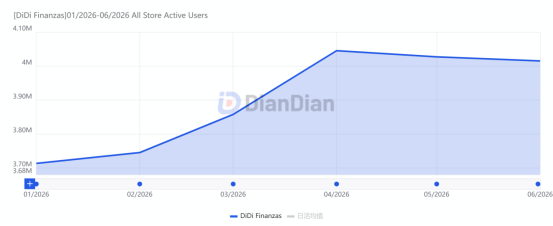
DiDi Finanzas' average MAU in Q2 rose further from the previous quarter to 4.0292 million, up 6.82% QoQ; cumulative downloads reached 2.1181 million, up 6.16% QoQ. In terms of operations, DianDian Data monitoring shows that it completed 12 version iterations across the App Store and Google Play in Q2. Combined with the DiDi Card Hot Sale 10% cashback campaign and operational actions such as server upgrades for core credit and payment modules, these moves provided strong support for steady user expansion and further consolidated its leading advantage.

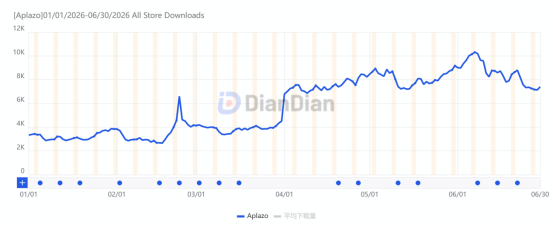
Aplazo remained in second place, with quarterly average MAU reaching 1.9630 million, up 11.75% QoQ; cumulative downloads reached 734,400, a sharp increase of 130.46% QoQ. Although it still trails DiDi Finanzas in user scale, Aplazo achieved simultaneous growth in downloads and MAU in Q2, compared with the divergence between new acquisition and active growth in the previous quarter, indicating a clear improvement in growth quality.

At the same time, some traditional leading platforms came under growth pressure. Tala's average MAU fell to 589,200, down 28.52% QoQ, while cumulative downloads declined 42.41% QoQ. App Credito Fonacot recorded only 49,600 downloads, down 85.73% QoQ, with active users also decreasing by 9.74%, showing that some mature platforms are facing significant pressure in new-user acquisition.
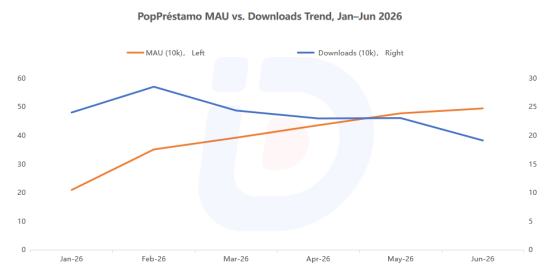
Among other platforms, PopPrestamo continued to rise in Q2 after rapid growth in the previous quarter. Its quarterly average MAU reached 469,500, up 47.74% QoQ, and its ranking continued to climb by three places from the previous quarter. However, its Q2 cumulative downloads fell 17.50% QoQ, indicating weaker growth momentum.

In addition, PrestamoClaro entered the Top 20 for the first time, ranking 19th, and became one of the fastest-rising apps in Q2. Its quarterly average MAU increased 38.08% to 246,100, cumulative downloads grew 65.48% QoQ, and its ranking rose by 12 places in a single quarter. This shows that in Mexico's cash loan market, there are still opportunities for small and mid-sized platforms to achieve ranking breakthroughs through user-acquisition growth.
Industry Dynamics: Growth Opportunities, Compliance Requirements, and Platform Capabilities Advance in Parallel
1. Kueski Continues to Expand Consumer Credit Scenarios, as BNPL Penetrates from Traditional E-Commerce Installments into Everyday Consumption
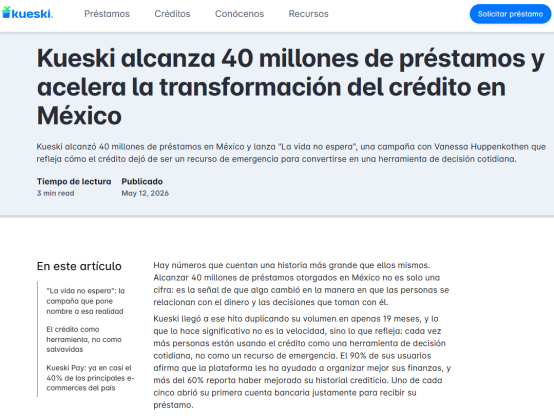
In May 2026, Kueski disclosed that its cumulative loan volume had exceeded 40 million loans and stated that its loan scale had doubled over the past 19 months. During the same period, Kueski Pay continued to expand BNPL use cases, extending from traditional e-commerce installments into high-frequency scenarios such as supermarkets and everyday consumption. It also connected with Chedraui, a major Mexican supermarket chain, further expanding its offline consumption layout.

Source: Kueski official announcement
https://www.kueski.com/blog/kueski-alcanza-40-millones-de-prestamos-y-acelera-la-transformacion-del-credito-en-mexico?utm_source=chatgpt.com
This development path shows that Mexico's digital credit market is gradually extending from satisfying short-term funding needs toward becoming a daily consumer finance tool. As the BNPL model penetrates more high-frequency consumption scenarios, competition among digital credit platforms is also shifting from early-stage user acquisition toward consumption-scenario coverage, repeat-borrowing capability, and improvement of long-term user value.
2. CONDUSEF Releases Personal Simple Credit Evaluation Results, Further Raising Transparency Requirements for Credit Products
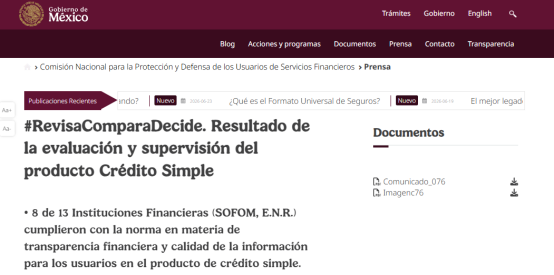
In May 2026, Mexico's consumer protection agency CONDUSEF released evaluation results for personal simple credit products, focusing on the compliance of financial institutions in areas such as contracts, fee disclosure, interest-rate presentation, and user information transparency. In the evaluation of 13 SOFOM E.N.R. institutions, only eight ultimately met regulatory requirements, representing a pass rate of 61.5%; some institutions still had deficiencies in interest-rate disclosure, contract format, fee explanations, and user information presentation.

Source: CONDUSEF official notice
https://www.gob.mx/condusef/prensa/revisacomparadecide-resultado-de-la-evaluacion-y-supervision-del-producto-credito-simple?utm_source=chatgpt.com
This evaluation reflects that Mexico's regulatory focus is extending from institutional access and illegal lending governance to full-process transparency management for formal credit products. For cash loan and digital credit platforms, as online lending competition intensifies, compliance requirements are no longer limited to licenses and operating qualifications. The ability to display loan costs, standardize contracts, and protect user rights will also become important factors affecting long-term platform development.
3. DiDi Finanzas Upgrades Financial Infrastructure to Strengthen the Stability of Credit and Payment Services
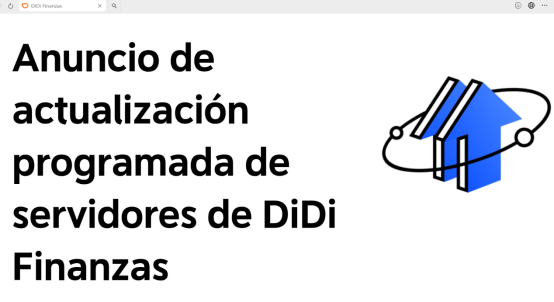
In June 2026, DiDi Finanzas issued a server upgrade notice, conducting maintenance and upgrades for core modules such as credit and payments. According to the notice, during the maintenance period, functions including revolving credit applications, withdrawals, repayments, and DiDi Card applications, activation, and online payments would be temporarily affected, while offline payment functions would remain normal and some services might experience brief response delays. This upgrade reflects that as financial business scale expands, leading platforms continue to strengthen infrastructure construction to improve service stability and business carrying capacity.

Source: DiDi Global notice
https://s3-uspu-cdn.didiglobal.com/marketing-page/service-suspension-notice/index.html?contact=1
It is worth noting that DiDi Finanzas' system upgrade also corresponds to some of the pain points previously raised in user feedback. According to DianDian Data's 2026 Overseas Cash Loan Market Research Report, in the analysis of DiDi Finanzas user reviews, 'app functionality and technical issues' accounted for the highest share of negative feedback, reaching 19.79%. The alignment between user feedback and the platform's subsequent optimization direction confirms the key value of user sentiment monitoring in understanding product experience and driving business iteration.
Overall, in Q2 2026, Mexico's cash loan market achieved phased stabilization amid marginal improvement in the macro environment, with app downloads ending consecutive declines and posting a slight rebound. However, from the perspective of user activity, the market is still in a recovery stage, and the conversion of incremental traffic into long-term active users still requires further observation. In terms of competition, leading platforms continue to maintain their advantages through user scale, product capabilities, and ecosystem strengths, while some small and mid-sized platforms have achieved ranking improvements through phased user acquisition. The industry's competitive landscape is continuing to adjust.