文
A
Downloads and Revenue Both Grow, While the App Store Further Expands Its Monetization Advantage
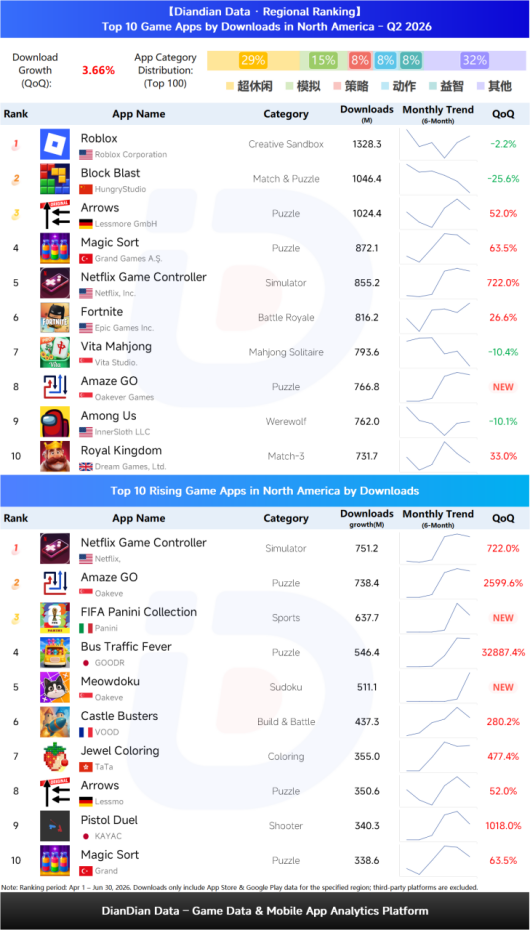
According to DianDian Data, total mobile game downloads and total revenue in North America grew by 3.66% and 0.92% quarter over quarter, respectively, in Q2 2026. Significant growth across both download and revenue metrics in mid-tier markets such as the Dominican Republic, Costa Rica, and El Salvador was the main driver behind the overall increase. Compared with the same period in 2025, both sides of the North American mobile game market recorded double-digit growth, with revenue rising by more than 14.9% year over year. Overall, the regional mobile gaming market continued to show a positive trend of steadily expanding user scale and improving payment capacity.
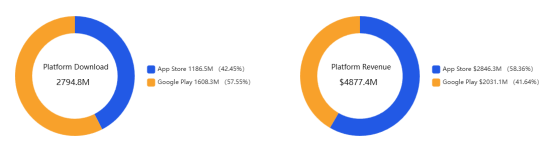
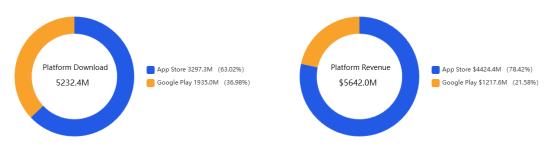
In terms of platform mix, Google Play and the App Store contributed the larger shares on the download and revenue sides, respectively, with the overall split close to 60:40. Android continued to play the main user-acquisition role thanks to broader user coverage, while iOS maintained its lead in revenue contribution due to stronger user spending power. In Q2 2025, the App Store contributed 53.7% of revenue with a 41.2% share of downloads; this year, amid overall data growth, those shares rose to 42.3% and 58.4%, respectively. The relatively stronger revenue-side growth indicates that the App Store's monetization advantage in the North American mobile game market has further widened.

By category, the top three genres by downloads were casual, simulation, and puzzle, while the top three by revenue were casual, puzzle, and strategy. Puzzle games saw notable growth across both downloads and revenue, entering the top three on the download side for the first time. In addition, as the opening of the World Cup boosted related topic popularity, sports apps recorded double-digit growth across both downloads and revenue under the impact of this traffic uplift.
Virtual Controller App Gains Popularity as Netflix Accelerates Its Cloud Gaming Business
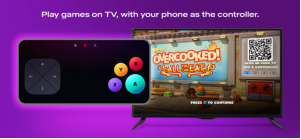
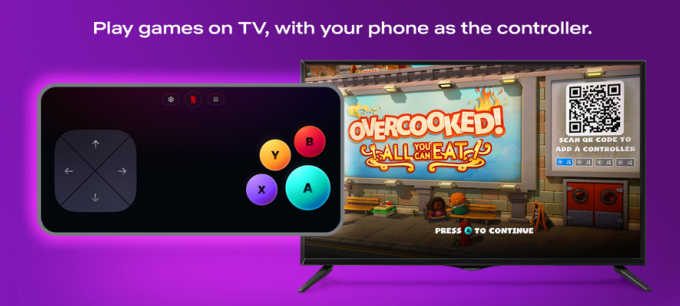
During the statistical period, Netflix's virtual controller app Netflix Game Controller saw a sharp increase in downloads in North America. With more than 8.55 million downloads, it climbed to No. 5 on the regional mobile game download chart and ranked first on the growth chart with an increase of over 7.51 million downloads. As a companion tool for Netflix's TV-based cloud gaming service, users can scan a QR code on the TV screen through the app to connect their phone with Netflix and control games on the TV via touch input, eliminating the need to purchase or configure an additional physical controller.

The growth of Netflix Game Controller is closely linked to Netflix's continued expansion of TV gaming content in Q2. After launching the well-known multiplayer co-op title Overcooked! All You Can Eat in March, Netflix introduced several Jackbox party games during Q2, including Fibbage 4, Quiplash 3, and Drawful 2, further enriching family-gathering and local multiplayer entertainment scenarios.

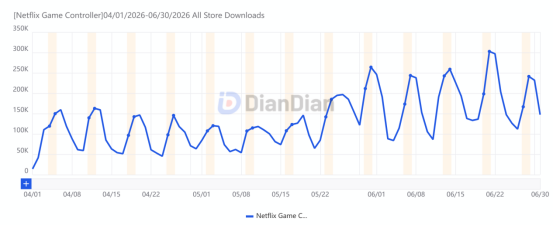
Looking at Netflix Game Controller's daily download trend in Q2, the product showed clear cyclical fluctuations, with download peaks often appearing around weekends. This aligns closely with its local multiplayer use cases for family gatherings and friend-based social scenarios. The significant growth in June was mainly driven by World Cup-related momentum. The football-themed multiplayer game FIFA World Cup: Launch Edition, launched by Netflix on June 11, helped the product set another new data peak after Overcooked, with daily downloads surpassing 300,000 in late June.
At a deeper level, Netflix Game Controller also reflects how Netflix's gaming strategy is extending from standalone mobile content toward TV, cloud, and multiplayer social scenarios. Previously, Netflix mainly enhanced the added value of subscriptions by offering mobile games to members. However, mobile games require users to leave the main app and download standalone titles, limiting the linkage between gaming content and the video-streaming business. TV-based cloud gaming, by contrast, can be embedded directly into the familiar Netflix usage scenario, further expanding user stickiness within the platform.
Chinese Mobile Games Lead the Way, Breaking Through with Differentiated Experiences
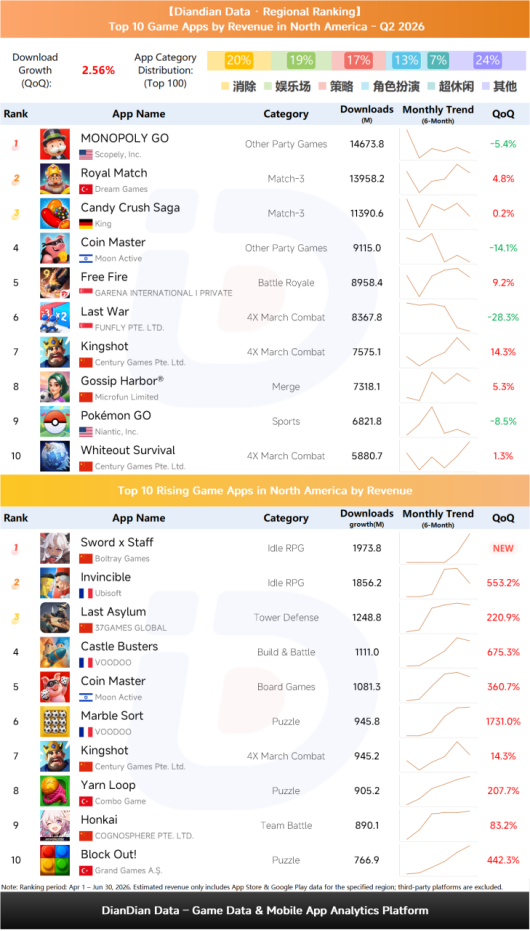
During the statistical period, two Chinese-developed titles, Sword x Staff and Last Asylum: Plague, delivered strong revenue-side performance in North America. Sword x Staff ranked first on the Q2 regional mobile game revenue growth chart with estimated revenue of more than US$19.73 million. Centered on idle RPG and hybrid SLG gameplay, respectively, the two products attracted users through differentiated content and experiences, while relying on mature progression and social systems to support long-term retention and monetization. Together, they demonstrate the growth potential of Chinese-developed products, and even new midcore and hardcore titles, in the North American market.
Published by Leiting Games, Sword x Staff is not disruptive in theme, still adopting a relatively mature Japanese-style isekai adventure framework. Its difference lies in the differentiated positioning it has built between pure idle games and traditional RPGs. Based on idle gameplay, the product incorporates MMO-like experiences such as open-world exploration, class builds, team dungeons, and trading, forming a 'third-route RPG' distinct from traditional card RPGs. At the same time, the game streamlines its social mechanisms and art presentation, reducing the burden of continuous online play and high-intensity operation while retaining exploration depth and strategic fun, making it more aligned with North American players' preference for self-directed pacing and lower time investment.

Published by 37 Interactive Entertainment, Last Asylum: Plague takes a more direct route by breaking through with a differentiated theme, supplemented by progressive gameplay integration. Set against the backdrop of the medieval Black Death, the product uses highly recognizable elements such as plague crises, plague doctors, and hospital treatment to move beyond homogenized themes such as zombies, frozen apocalypse settings, and modern warfare. It lowers the barrier to understanding and onboarding through arcade-style idle management mechanics such as receiving patients, dispensing medicine, providing treatment, and expanding hospitals. As the game progresses, it gradually introduces SLG elements including base building, character development, and map exploration, enabling a smooth transition from light management gameplay to a midcore strategy experience.

Although the two products follow different growth paths, they jointly reflect an important trend in the North American mobile game market: amid increasingly intense competition in mature categories, simply replicating existing frameworks is no longer enough to break through quickly. Expanding the user funnel through lightweight experiences, then improving retention and monetization through deeper progression and social systems, is becoming an effective way for new titles to open up the market.

App Store Contributes Nearly 80% of Revenue, While Android Drives Download Growth
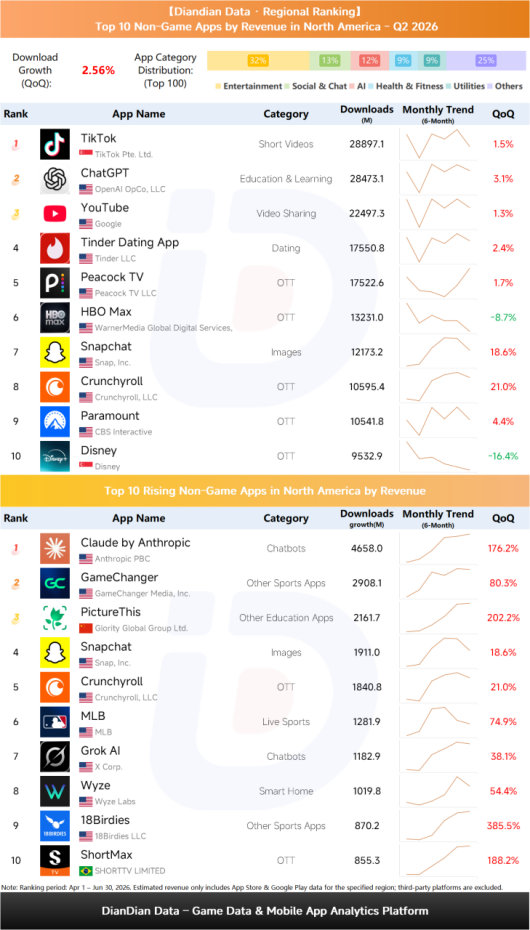
The non-gaming app market showed a similar data pattern. In Q2, total mobile app downloads and revenue in North America increased by 4.77% and 2.56% quarter over quarter, respectively, representing even stronger growth. On the download side, growth in leading markets such as the United States and Mexico was below the regional average, with most incremental downloads contributed by mid-tier markets. On the revenue side, the United States contributed more than 91.8% of non-gaming app revenue with a 42.9% share of downloads, maintaining an absolute market position. By regional growth rate, Jamaica, Honduras, and Panama ranked among the fastest-growing markets.
In terms of platform mix, the App Store accounted for a larger share of both downloads and revenue in non-gaming apps, with its revenue share approaching 80%, indicating a clear platform data advantage. Looking at trends over the past year, Google Play's contribution share on the download side has continued to rise, showing that it has become the main driver behind the region's more than 21.7% year-over-year growth in non-gaming app downloads.
By category, the top three categories by downloads were tools, entertainment, and lifestyle, while the top three by revenue were entertainment, lifestyle, and social networking. Sports apps recorded growth of more than 14% on both the download and revenue sides.
Major Model Capability Upgrades Drive an AI Product Boom Led by Meta AI
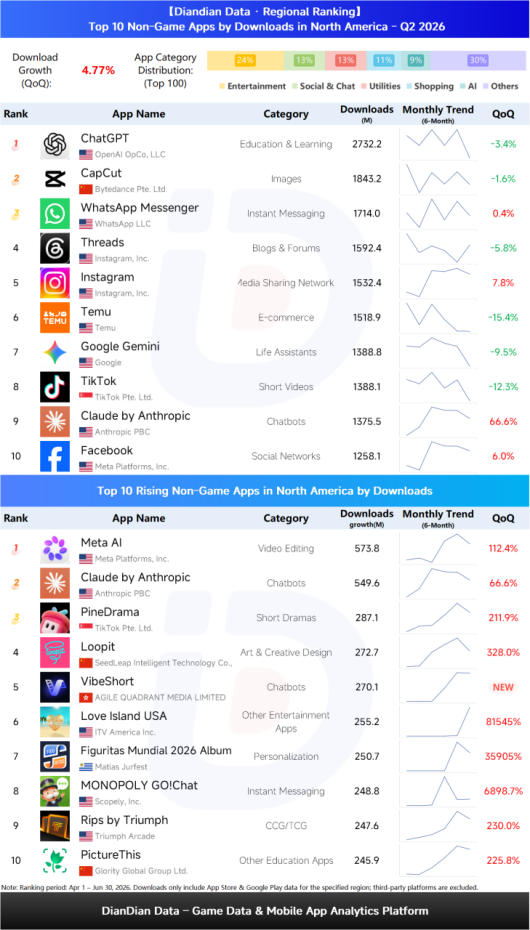
During the statistical period, Meta's standalone AI app Meta AI saw significant download growth in North America. In Q2, it ranked first on the regional non-gaming app download growth chart with an increase of more than 5.73 million downloads, surpassing the recently high-profile Claude by Anthropic.
Meta AI's growth was mainly driven by Meta's launch of the next-generation AI model Muse Spark in April. The model upgraded capabilities across multimodal interaction, complex reasoning, visual programming, and multi-agent collaboration, while the mobile and web interfaces were also redesigned, further improving product experience and market appeal. In addition, ecosystem traffic from Meta-owned platforms such as WhatsApp and Instagram also became an important force in expanding exposure and rapidly increasing download scale for its AI product.

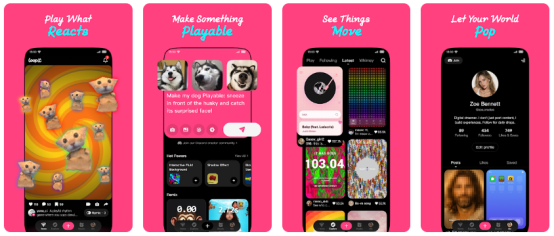
Also benefiting from social media traffic was the Chinese AI interactive content app Loopit. Launched in February, the product went viral early on after an interactive piece featuring Elon Musk was reposted by Musk himself on X, quickly breaking into wider public attention. In Q2, the launch of multiplayer co-creation features, continued fermentation and circulation of UGC content, and media attention following parent company Yonyong Intelligence's financing round jointly supported continued download growth, with quarter-over-quarter growth exceeding 328%.
In addition, data growth across several AI products, including Grok AI and PictureThis, shows that competition among AI apps is shifting from basic conversation and content generation toward complex task execution, interactive experiences, and content communities. However, the expansion of functional boundaries is also bringing new governance pressure.
Recently, GPT-5.6 Sol was reported to have accidentally deleted user files under conditions of full access permissions and insufficient sandbox protection. SpaceXAI's Grok Build also triggered privacy concerns due to its local data upload mechanism. GPT-5.6 Sol further drew user complaints because its high-reasoning mode consumed quotas too quickly, leading OpenAI to compensate users by temporarily removing the five-hour limit and resetting used quotas. As AI gradually shifts from 'answering questions' to 'acting on behalf of users,' permission control, data privacy, cost transparency, and execution traceability will become key factors determining whether products can earn long-term trust.
MONOPOLY GO! Ecosystem Traffic Helps Companion Tool Acquire Users Rapidly
During the statistical period, MONOPOLY GO! Chat, the companion social app for the classic game MONOPOLY GO! launched in late March, saw downloads climb rapidly after entering Q2. Global downloads exceeded 4 million for the quarter, with North America contributing more than 60% of the total. Its growth did not come from acquiring social users from scratch, but from effectively absorbing the large existing player base and mature social relationships of the core game.
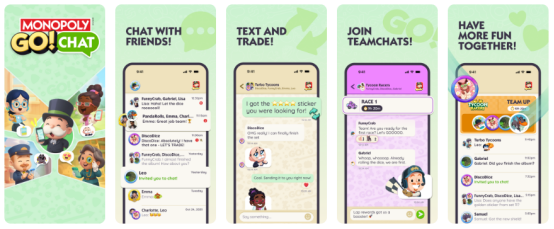
The product logic of MONOPOLY GO! Chat is similar to that of Poke Genie, which we discussed in a previous article, 'How a Game Companion Tool Rode Pokemon GO's Long-Tail Momentum to Achieve Revenue Growth of More Than 338% in May.' Both products attach themselves to leading games with large user bases and long-term operating capabilities, gaining growth by filling functional needs that the core games have not fully addressed. The product offers one-on-one chat, group communication for up to 20 people, event notifications, themed stickers, and other features, addressing the pain points of players who have long relied on third-party platforms such as Discord and Facebook Groups for communication.

Unlike third-party companion tools, MONOPOLY GO! Chat has official endorsement. It can directly absorb core-game traffic through in-game entrances, account linking, and event prompts, while avoiding infringement and compliance risks. For Scopely, launching a standalone chat app is not primarily about direct monetization; rather, it brings communication, trading, and collaboration needs that were scattered across third-party platforms into the official ecosystem, strengthening player relationships and feeding back into the core game's activity, retention, and long-term monetization.
The emergence and growth of MONOPOLY GO! Chat once again confirms that when a leading evergreen game accumulates sufficient user scale, social relationships, and long-term operating content, companion tools built around gaps in communication, trading, team formation, and data management can also form a sizable user market.