文
A

How can a nine-cell board support million-dollar monthly revenue? Plants on Fire combines merging, auto chess and tower defense in competitive attack-and-defense matches, demonstrating another possibility for Nuverse’s overseas publishing business beyond the attention surrounding Bu Wen Fan Chen (不问凡尘).
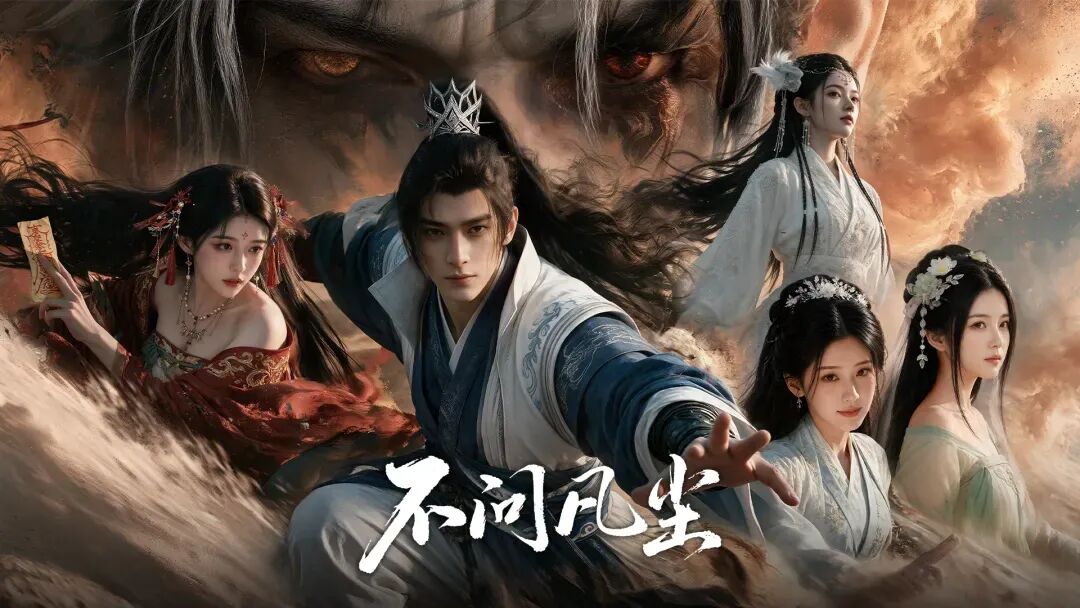
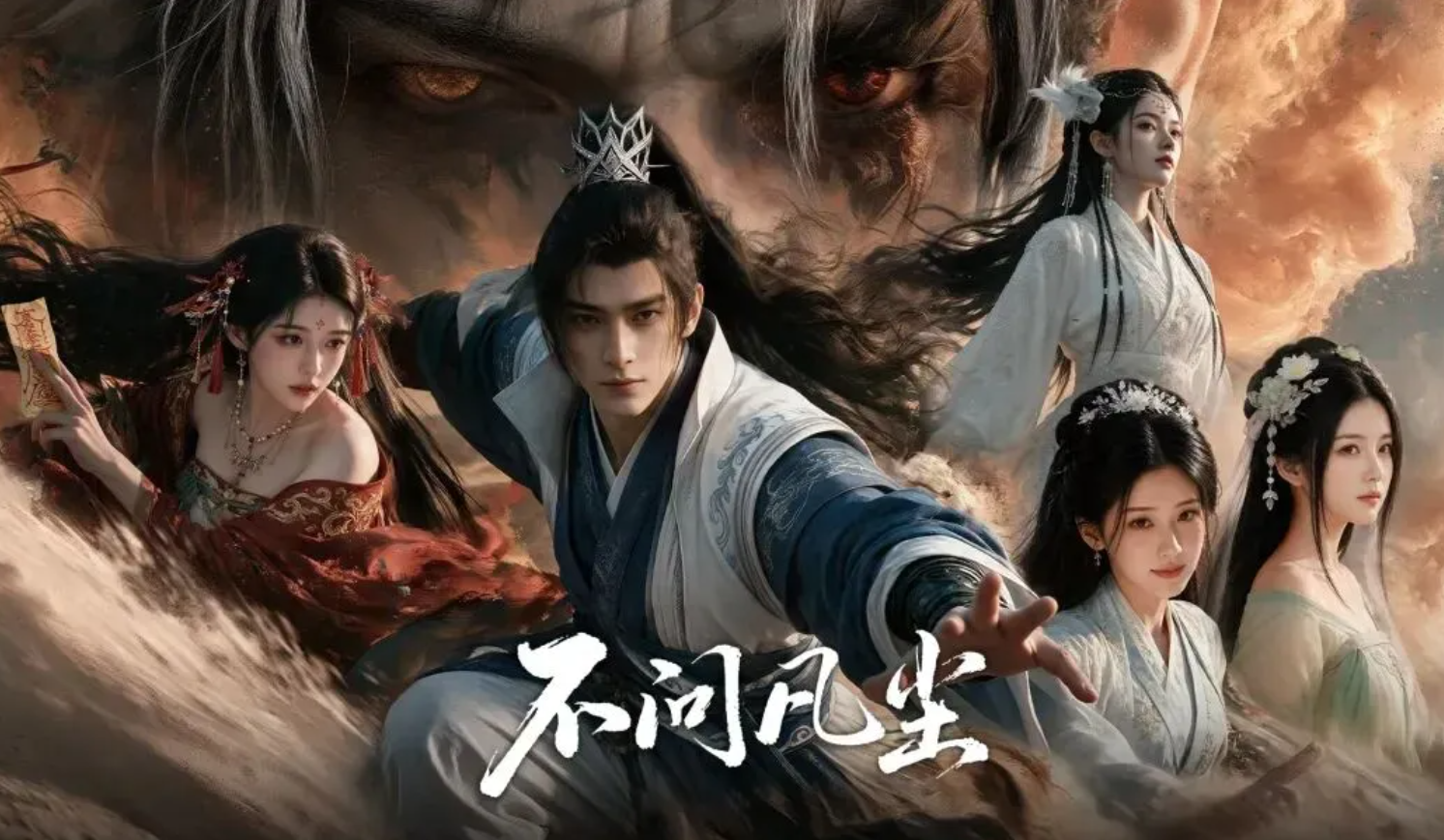
Recently, ByteDance’s first AI-powered interactive cinematic game, Bu Wen Fan Chen (不问凡尘), has attracted considerable discussion.
The title is a turn-based cultivation RPG with a realistic, AI-generated live-action visual style. Development began in May last year with fewer than 20 team members. It is Jiangnan Studio’s latest effort after three unsuccessful AI game projects. Most environments, quests and combat animations are generated using AI models such as Seedance. AI NPCs understand players’ natural-language input and respond dynamically in keeping with their character profiles. It entered Early Access on Steam on September 23 this year and reached the best-selling Top 20 the following day. On October 13, the developer announced that player numbers had exceeded 260,000, with estimated gross revenue of RMB 5 million–8 million in three weeks.
AI-generated video, natural-language interaction and cultivation RPG gameplay clearly explain why Bu Wen Fan Chen quickly became an industry talking point. But shifting attention from discussion to commercial performance, another Nuverse-published title may have more solid results: Plants on Fire: Attack&Defend, a plant-themed, light competitive tower-defense battler. Global revenue has remained steady over the two months since its official launch, reaching approximately $1.83 million over the past month, equivalent to about RMB 12.22 million.
For a casual strategy title combining merging, auto chess, tower defense and deckbuilding in one loop, with short competitive matches and hybrid monetization, this is already a notable performance. It demonstrates relatively stable user demand.
What testing and scaling process did Plants on Fire undergo? Which gameplay features attracted users so quickly? What experience does its development team bring? And what does its success mean as ByteDance continues adjusting its gaming business? Diandian Overseas examines these questions below.
01
Concentrated Acquisition in Late August, Followed by More Than $1 Million in September Revenue
The Testing and User-Acquisition Strategy Behind Plants on Fire’s Overseas Growth
Diandian data shows that Plants on Fire opened testing on Google Play in a small number of markets, including Indonesia and Brazil, in mid-November 2025, generating measurable but limited market data. Over the following months, it remained in a testing and preparation phase without any clear scaling in advertising. From February through May 2026, monthly downloads remained in the tens of thousands, while monthly gross revenue fluctuated between $20,000 and $40,000, or approximately RMB 134,000–270,000.
The real turning point came in June, when downloads rose to 520,000, with daily downloads generally between 8,000 and 12,000. Monthly gross revenue reached approximately $176,000, or RMB 1.18 million, suggesting that this testing round had demonstrated initial viability. In July, testing became relatively stable: monthly downloads fell to about 295,000, while gross revenue edged up to $220,000, or RMB 1.48 million.
In the middle and latter part of August, the game officially arrived on the App Store and entered a concentrated scaling phase around its global launch. Daily downloads rose rapidly, with approximately 500,000 downloads and estimated gross revenue of $431,000, or RMB 2.88 million, for the month. Scaling continued in September. Daily downloads reached a local peak of about 60,000 on September 9, while daily gross revenue peaked at $95,000, or RMB 640,000, on September 30. Monthly downloads totaled approximately 1.111 million, while gross revenue rose 293% month over month to $1.692 million, or RMB 11.32 million, exceeding $1 million for the first time.
Although figures declined somewhat in October, the game maintained meaningful scale. Daily downloads are currently around 20,000, with estimated daily gross revenue of about $60,000, or RMB 400,000. In game-grossing rankings, its performance has been particularly strong in Southeast Asia, Traditional Chinese-language markets and Brazil.
The game’s positions on global iOS game-grossing charts on October 21
To date, cumulative downloads are approximately 3.1 million. Brazil, Indonesia and Thailand lead with shares of 18.34%, 15.92% and 9.47%, respectively. Estimated total gross revenue is around $3.8 million, or RMB 25.35 million. The United States, South Korea and Taiwan, China contribute 19.98%, 15.57% and 12.01%, respectively.
As with most new releases, the changes in the game’s figures broadly match its advertising cadence, which progressed through early small-scale testing, multiple rounds of gameplay validation, expanded testing in June and concentrated global acquisition in late August.
Public information shows approximately 8,853 deduplicated ad campaigns and 3,872 deduplicated creatives between early July and late September this year, covering 45 markets and generating an estimated 185.7 million impressions. Advertising rose noticeably from late August to early September, with active campaigns reaching their peak for the period on September 3. Video accounted for about 71% of creatives and images for 29%. Content included gameplay demonstrations, tower-defense and auto-chess positioning, live-action openings and nostalgic packaging reminiscent of Plants vs. Zombies.
Image source: Chengguo Shuhang (橙果数航)
Taken together, the figures suggest that aggressive acquisition helped Plants on Fire cross $1 million in monthly gross revenue within a short period. In reality, however, the gameplay had already undergone lengthy iteration. Solid pacing and player experience are the foundation of its market position.
02
From Ta Fang Dui Jue (塔方对决) to Plants on Fire
How Did This Lightweight Auto-Chess Tower-Defense System Take Shape?
Plants on Fire’s basic battlefield is a 3×3 board. Each round, players purchase plants from the shop, place them on the board and strengthen their lineup by moving, merging and repositioning them. Once preparation ends, the plants fight automatically, both clearing enemy units and contributing to an offensive force that pressures the opponent’s tower.
This is not conventional one-way tower defense. Plants continuously attack incoming enemy units, and each plant also corresponds to two tower-assault soldiers. The higher a plant’s attack, the more health its summoned soldiers have. Once combat begins, both sides’ assault forces advance toward the opponent along a route. After one side’s forces are eliminated, the other side accelerates its advance, ultimately damaging the enemy captain.
Every action on the board therefore affects both defense and offense. Plants must hold their position while growing stronger to improve their assault troops’ survivability. Focusing only on immediate enemies may prevent players from building offensive pressure in time; focusing exclusively on attack may leave defenses too weak to hold.
The game currently offers 69 units, costing 3, 5 or 8. Players receive fresh resources every round, with the amount increasing as rounds progress. Interest, winning streaks and losing streaks—common in traditional auto chess—have been removed, so players need not hoard resources or calculate their pacing around interest. The shop also allows individual units to be locked. Players can retain a needed unit without locking the entire shop, reducing the impact on economic planning and making the system easier for newcomers to understand.
A deck can contain up to nine units, with no more than three different units at each cost tier. These restrictions narrow the deckbuilding space and prevent stacking large numbers of low-cost units while retaining lineup choices. Identical units can merge to gain stars, with their base stats directly added together. Merging may look like turning two units into one, but the growth effects of individual plants are what truly shape the battle.
For example, some plants gain additional attack when they gain a star, while others increase other plants’ attack after gaining a star themselves. If players have both types, the order of merging changes the final attack outcome. Merging is therefore not simply about reaching a higher star rating. Players must decide which growth effects to trigger first and which units to retain temporarily on the board.
Positioning matters as well. Some support plants strengthen the unit directly above them, requiring players to place the support first and then move their main damage dealer into position. Others strengthen adjacent units in the same row or column, requiring horizontal or vertical planning. Still others boost attack within a cross-shaped area, favoring a concentrated damage lineup.
Every few rounds, players also face different bosses. Each places different demands on area damage, attack speed, sustained damage and crowd control, preventing reliance on one fixed lineup.
Image source: Youxi Xinzhi (游戏新知)
Once players understand the core battles, the game unlocks more random and long-term systems. Fate’s Gift offers random cards at specified rounds, letting players choose one of three immediately effective bonuses. Fate’s Contract provides in-match objectives that unlock additional skills when completed. Multiplayer brawl mode is closer to traditional auto chess. PvE stages, two-player co-op, multiplayer brawls, club points competitions and a merge farm serve purposes including practice, social play, multiplayer competition and bringing players back outside matches.
Image source: Youxi Xinzhi (游戏新知)
The out-of-match systems support long-term progression. Players upgrade character cards to improve team-wide damage and assault-soldier health, and unlock new plants, variants and event content.
The store combines rewarded advertising with in-app purchases, including bundles, passes, memberships and unit-upgrade packs.
Of course, this gameplay system was not settled from the outset.
Public information identifies the developer of Plants on Fire as Shanghai-based Shimmer Dream (上海身梦科技), founded in 2023. Founder Zhang Zhechuan previously led the Creative Workshop at Tencent’s NExT Studios, where he headed development of the Chinese indie game Unheard, which earned a 96% positive rating on Steam and sold more than one million copies.
In early 2024, Shimmer Dream tested its self-developed Ta Fang Dui Jue (塔方对决), but took no further visible steps at the time. This was the predecessor to Plants on Fire. It already contained a 3×3 board, random shops, star-upgrading through merging and PvP tower defense. However, players mostly defended their own areas and pressured opponents by deploying units, creating a weaker sense of direct confrontation.
Ta Fang Dui Jue (塔方对决) — image source: Enjoy Global (Enjoy出海)
In 2025, an updated version appeared at a TapTap game showcase as Bai Tou Ba! Pen You (掰头吧!盆友), the game’s Chinese title at the time. It gradually added the plant theme, boss challenges and two-player co-op. In Plants on Fire, both sides’ forces advance from their positions toward the opponent along a route, linking plant defense and offense into the same combat loop while continuing to simplify economic rules.
The direction of these adjustments is clear: preserve auto chess’s purchasing, deckbuilding, merging and positioning while reducing the economic-management burden, then locate strategic depth in plant skills, merge order, boss mechanics and lineup synergies.
Plants on Fire does not simply stack tower defense, auto chess and merging. Over more than two years of testing, it has redistributed accessibility and strategic depth. Players first learn to buy plants, merge units and defend a route. Only as they go deeper must they handle deck restrictions, positioning relationships, skill chains and bosses. This is how the product can serve both broad casual audiences and strategy players.
The Chinese version has now been renamed Quan Zhi Ying Xiong: Dui Jue (全植英雄:对决). It was first revealed on September 24, with its first monetization-enabled test scheduled for October 22. A full open beta is expected soon.
03
From Large-Scale Expansion to Testing Multiple Product Lines
ByteDance’s Gaming Business Enters a New Phase
Based on current performance, Plants on Fire is one of ByteDance’s more notable new games this year. Its significance, however, extends beyond commercial figures alone.
Observers have often described ByteDance’s recent gaming changes as a retreat, particularly after the sale of MOONTON Games and Guangzhou’s Lighthouse Studio in 2026.
Its existing pipeline, however, suggests a more complex picture. After selling MOONTON Games, ByteDance retained studios including Beijing’s Oasis and BlueSea, Shanghai’s ZERO36, Shenzhen’s NEON, Hangzhou’s Jiangnan, Xinguang and AIGC teams, and Guangzhou’s Glow Studio, while continuing to advance multiple products.
Mistfall Hunter represents Oasis Studio’s exploration of dark-fantasy action extraction gameplay, while Ling Jing: Ru Qin (零境·入侵) targets premium side-scrolling action roguelikes. Project: Duel (代号:对决) combines hero shooting with lane pushing. Totopia (托托比亚) and Ji He! Jiang Guo Zhen (集合!浆果镇) explore party games, UGC, life simulation and social play. Bu Wen Fan Chen tests the potential of AI-powered interactive games.
Mistfall Hunter
Meanwhile, ByteDance continues operating titles including Hatsune Miku: Colorful Stage!, One Piece: Fighting Path, Earth: Revival and Crystal of Atlan, providing cash flow and long-term operating experience.
Hatsune Miku: Colorful Stage!
ByteDance’s gaming changes therefore look more like a shift from large-scale expansion to parallel validation across multiple product lines. Previously, it sought to build a major presence in mid-core and hardcore games rapidly through capital, traffic and acquisitions. Today, studios must pay closer attention to project costs, product lifecycles and self-sustaining revenue. Projects are more restrained in scope, development decisions more cautious and publishing schedules more focused on validation before scaling.
Plants on Fire exemplifies this approach. A small team developed it through long-term iteration. Its gameplay is accessible enough for global acquisition, while merging, positioning, decks and boss mechanics retain depth and help prevent it from becoming disposable entertainment. Nuverse takes the product to more markets and amplifies its potential through advertising, pre-registration, creative testing and localized publishing.
Bu Wen Fan Chen represents ByteDance’s exploration of AI games, while Plants on Fire offers another route through accessible global publishing and hybrid monetization. The former generates more discussion; the latter is closer to established commercial validation.
For ByteDance’s gaming business, the key question is not whether it will keep betting on a single blockbuster. It is whether projects across different studios, genres and technology paths can continuously generate useful feedback and ultimately form new product pillars.
For now, Plants on Fire has demonstrated one thing: following ByteDance’s strategic adjustments, some products can still steadily build users and revenue overseas, away from the spotlight. It may not yet be the next global blockbuster, but it is already a useful case study as ByteDance searches for new ways to grow.