
文
A

With first-day revenue below $30,000, Xingtu Tiancheng (星途天城) generated approximately $1.08 million on iOS in its first 11 days of open beta and climbed to No. 38 on the grossing chart. After three years of development and multiple major revisions, can it create a new growth line for Shiyue before Wangyue launches?
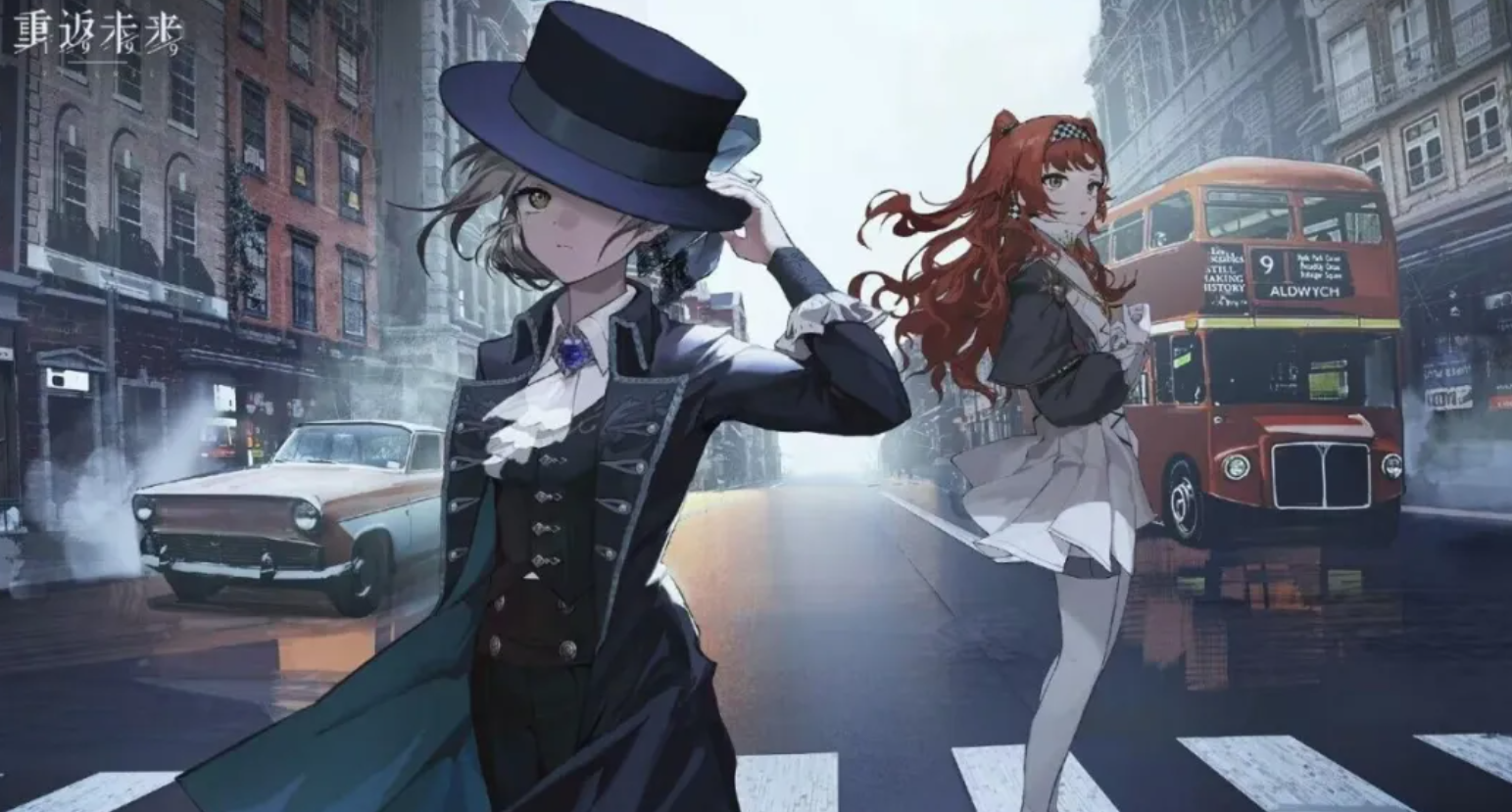
When discussing Victorian aesthetics in anime-style games, it is impossible to overlook Deep Blue Interactive’s Reverse: 1999.
The game entered open beta at the end of May 2023. Instead of following the mainstream anime-game route of a 3D open world, it built a distinctive content framework from modern history, retro British style, occultism and the New Weird. Live2D character performances, full English voice acting, low-saturation retro visuals and cinematic storytelling together form its identity. Its gameplay still uses gacha and turn-based combat, but its real appeal is not combat alone; it is the complete and coherent combination of worldbuilding, art and narrative.
Amid the anime-game competition of 2023, Reverse: 1999 was often regarded as one of the few products outside miHoYo to truly break through and carry launch momentum into long-term operations. Its first month of domestic iOS revenue was approximately $7.63 million. Although revenue declined afterward, it generally remained above $1 million and is currently around $2.2 million per month. The overseas version launched at the end of October 2023, generating approximately $11.75 million in its first month. Its curve broadly mirrored the domestic version, with current monthly revenue around $1.2 million and cumulative overseas revenue approximately $98 million. Japan, South Korea and the United States contribute 28.48%, 27.82% and 19.06%, respectively.
As this direction became validated, more publishers began exploring combinations of modern retro British settings, steam machinery and occultism. Leiting Games’ Silver City combines a Victorian-style city with detective themes and open-world action, while City of Radiance 1907 places similar retro-industrial aesthetics in city building and simulation management. The same aesthetic direction is now supporting different product experiments.
Recently, Shiyue also brought a new title in this direction to market. Its anime-style vertical idle turn-based card game Xingtu Tiancheng entered open beta on October 22 after multiple fundamental revisions. Although first-day revenue was below $30,000, it climbed to No. 38 on the iOS game-grossing chart one week later.
How did Xingtu Tiancheng perform at launch? What revisions did it undergo, and what are its gameplay features today? Within Shiyue’s portfolio, can it provide new revenue support while Wangyue continues development? DianDian Overseas breaks down these questions below.
01
Short Warm-Up, Slower Monetization
Xingtu Tiancheng Generates $1.08 Million on iOS in 11 Days of Open Beta
DianDian data shows that Xingtu Tiancheng opened pre-downloads one day early, on October 21. It recorded approximately 107,000 iOS downloads that day and reached No. 4 on the iOS free-game chart. Downloads rose to a local peak of 158,500 on the first day of open beta, then declined clearly and now stand at around 23,000 per day. The free-game ranking has fallen to No. 29, meaning that launch acquisition has shifted from a concentrated burst to relatively steady new-user inflow.
iOS revenue proved more resilient than downloads. First-day revenue was approximately $24,300, or RMB 163,000, then rose for four consecutive days to approximately $130,700 on October 26, or RMB 876,000, 5.4 times the first day. Daily revenue then declined gradually with fluctuations. The game reached No. 38 on the iOS grossing chart on October 28 and currently generates an estimated $94,000 per day, or RMB 630,000, ranking No. 51.
After 11 days of open beta, the game had accumulated approximately 650,000 iOS downloads and $1.08 million in total iOS revenue, or RMB 7.2 million.
The two curves show that new-user acquisition was released early, while spending rose gradually as the live service progressed. The data has positive signals but is not exceptional. For a product centered on character growth and layered progression, this divergence is understandable. Ten days of data is not enough to judge retention, acquisition payback or long-term revenue.
The concentrated warm-up campaign before open beta was also relatively short and restrained, which may explain the product’s low-key initial performance.
The game officially opened reservations across platforms on August 28 and announced its launch date on October 9, only 13 days before open beta. Promotion focused mainly on the theme and characters. The official team partnered with Xinghuo Chuanming to send the game’s music and player messages into space, and worked with Wang Xing Ji’s traditional fan-making craft to turn Xuannu’s weapon, the Nine Heavens Strategy Fan, into a physical work. Community giveaways, streamer recruitment and video-creation incentives further supported participation.
After open beta, there was also discussion around the art. Some players compared promotional images and character illustrations with works such as Reverse: 1999, while artists questioned the design of certain characters.
Overall, Xingtu Tiancheng went live after a short warm-up and achieved a clear round of revenue growth. It has shown that theme, art and a mature card-game framework can quickly establish market presence. Whether launch heat converts into long-term retention will depend on whether new cards, seasons, co-op modes and version events can sustain the willingness to spend.
02
More Than Three Years of Development, from Exploration to SLG
Ultimately Returning to a Familiar Idle Card Framework
To understand how Xingtu Tiancheng retains players, we need to look beyond its art appeal and into its gameplay. Retro Britain and steampunk fantasy create the first impression; the daily loop is built around lineup building, resource accumulation and multiplayer dungeons.
The story takes place in a world called Enuma. After a great flood, seven civilizations rebuild their homes on floating islands using steam and magitech. The long-sleeping Sky City reappears, and an unknown disaster approaches. Players act as special investigators for the Apocalypse Special Affairs Bureau, recruit Astrals, pilot airships, investigate the disaster and pursue lost memories. Floating cities, mechanical facilities and myths of the gods provide the shared backdrop for the setting, art and character progression.
At the structural level, the game combines idle cards, turn-based combat, character transformation and lightweight MMO systems. A six-person team consisting of the protagonist and five Astrals advances the main story, gains resources through battles and invests them in levels, stars, equipment and skills to challenge harder stages. Idle rewards and resource factories provide continuous output, while co-op dungeons, a marketplace and seasonal content extend progression goals into player interaction.
Image source: New Game Talk (新游说)
Combat is primarily automatic and turn-based. Characters can release ultimates after filling their rage meters, while action order, control chains and damage timing still affect results. The protagonist is always deployed and can switch among tank, healer and damage roles, helping players complete a lineup around the Astrals they own.
Image source: New Game Talk (新游说)
Elemental relationships further constrain team building. Senluo, Canglei, Canglan and Chiyang counter one another, while deploying units of the same element grants additional bonuses. Chaos units can fit different lineups. Players must trade off character strength, elemental bonuses, class composition and progression. Level resonance and shared equipment lower the cost of changing teams, but stars and exclusive weapons still require separate investment.
The officially promoted Three-Stage Descent of the Gods is also part of this growth system. Astrals gradually awaken and descend from their initial forms. Their appearance changes, and they gain more complete skill abilities at key stages.
Compared with typical solo card games focused on pushing stages, Xingtu Tiancheng is notable for combining equipment acquisition with multiplayer participation. For example, co-op dungeons such as the Gate of Babel require players to challenge them together, and the protagonist’s class switching affects team roles. Equipment and resources from dungeons can enter the Sky Market and circulate through trading, requests and auctions, creating more direct resource links among players.
Co-op therefore provides more than extra rewards: it affects progression efficiency. Trading connects the needs of different players. Guild chests, group challenges and airship offense and defense further strengthen social organization. Tower climbing, boss challenges, multi-team dungeons and group competition test single-team strength, sustained output, character reserves and multi-team development, respectively. Seasonal tasks, exclusive weapons, runes and curios continue to support long-term goals and spending demand.
The design aims to reduce the initial burden through automatic combat and shared progression, then extend the experience through multi-team requirements, cooperation and resource circulation. But waiting for teams, participating in events and developing multiple lines also increase daily commitment. Whether these systems become goals that players willingly pursue will determine whether burden reduction and long-term multiplayer play can truly coexist.
The current structure was only finalized after multiple major revisions.
Public information shows that the project recruited testers in 2023 under the name Code: Gods. It attempted to add RPG and map exploration to idle cards. Players could switch between the surface and inner worlds: after exploring the surface, they entered the inner world to handle disasters. Combat used one protagonist and five heroes, with customizable protagonist skills and manual target selection, placing greater emphasis on the connection between exploration and combat.
Image source: Game New Knowledge (游戏新知)
In a later test, the product shifted toward fog exploration and a Top Heroes-like progression. Players led a hero team along routes, fighting monsters, opening chests, collecting resources and unlocking statues. Exploration feedback and short battles were connected more tightly, creating an experience closer to titles such as Top Heroes. This phase also added a main-city building and SLG systems. Players repaired the floating city, built and upgraded production facilities, then unlocked resource collection, territory expansion and alliance interaction on the world map.
In another test in April 2026, the game made another major adjustment. It gradually removed the open world, hack-and-slash and heavier SLG content and returned to a purer idle-card framework. The protagonist and Astrals became the main progression targets, and combat shifted from exploration to automatic stage pushing. Resource factories, a public hall and co-op dungeons were retained to provide time-based rewards and social play.
It retained the signature limited-time tasks of casual SLG games
The retained resource factories
The repeated adjustments were therefore not simply about deleting complex mechanics. They gradually shifted the focus from making one product cover several genres to adding cooperation and circulation around card progression, bringing the product back into a development area more familiar to Shiyue.
03
The Flagship Project Wangyue Has Not Yet Landed
Shiyue Needs More Near-Term Support in Familiar Territory
Within Shiyue’s new-product portfolio, Wangyue is in fact the most anticipated title.
Developed by Xingchen Studio, this urban open-world RPG combines a modern Chinese city, action combat and Moon Spirits. It seeks to make Moon Spirits part of exploration, movement, management and combat rather than a standalone collection system. But a project of this scale must solve far more than visual quality.
Public reports indicate that Wangyue began development around 2021. It was initially positioned as an anime-style action game built around a contained sandbox, then shifted to an open world. Its first gameplay footage appeared in 2023, followed by a PC technical test in January 2025. After the first test, the project underwent large-scale revisions, reworking character designs, worldbuilding and rendering. By October 2025, the team had grown from approximately 300 people to more than 600.
From June to July this year, Wangyue presented a new version through offline trials and BW, highlighting Lingnan urban features and the connection between Moon Spirits and city life. In public communication in July, the team said the new version had undergone approximately 15 months of redevelopment. In September, the project made another development-management adjustment: according to GameLook, executive producer Hua Tao stepped down and Xingchen Studio head Zong Huan took direct responsibility for the project.
The expanding team, continuously changing content and lack of formal commercialization all imply a long investment cycle for Shiyue. Open-world maps, art, combat, interaction and performance optimization constrain one another, and adding staff alone is unlikely to shorten every stage.
Given this product cadence, Xingtu Tiancheng can be understood as a pragmatic commercial bridge. While the large project continues development, a new title backed by mature category experience can enter the market first, providing the company with additional revenue and operational feedback. Character collection, numerical growth, lineup building, idle rewards and multiplayer competition are all structures Shiyue has repeatedly practiced.
This does not mean it is merely an emergency release. Xingtu Tiancheng itself has undergone nearly three years of development. Its current positioning looks more like a relatively controllable commercial path selected after long-term trial and error: retro fantasy attracts attention, a mature card framework supports progression, and cooperation and trading among players extend the experience.
The game has taken its first step in commercial validation. Whether it can turn that step into a stable business will depend on Shiyue’s accumulated expertise in progression and operations, as well as whether the new systems give players real reasons to stay. While Wangyue seeks a larger breakthrough, Xingtu Tiancheng’s ability to continue providing revenue and a user base will also affect the room Shiyue has for its next phase of investment.