文
A
Although the summer release season has ended, the September new-game market has not entered an off-season. Based on the announced release schedule, Dream New Zhu Xian: Light Play and Tada Adventure Squad arrived at the beginning of the month, while Tencent's Honor of Kings: Chess, Bilibili's Shine On! Rumi, and FunPlus's Immo are also set to follow. Key projects from leading publishers will collide with products across auto-chess, pet-catching RPG, MMO, and casual tower-defense categories.
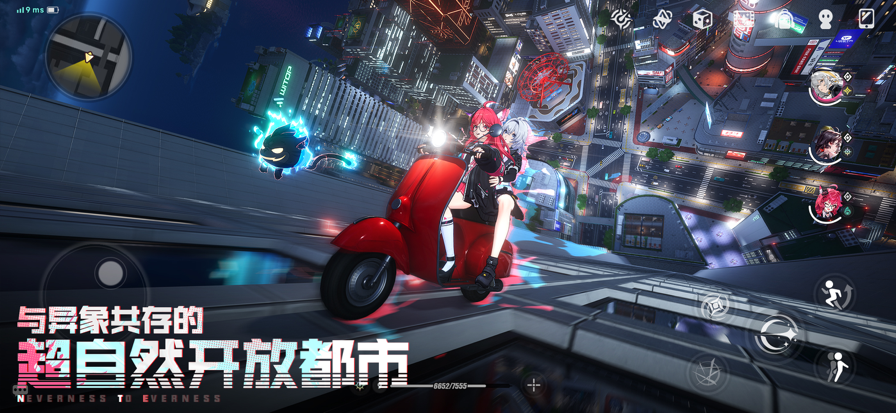
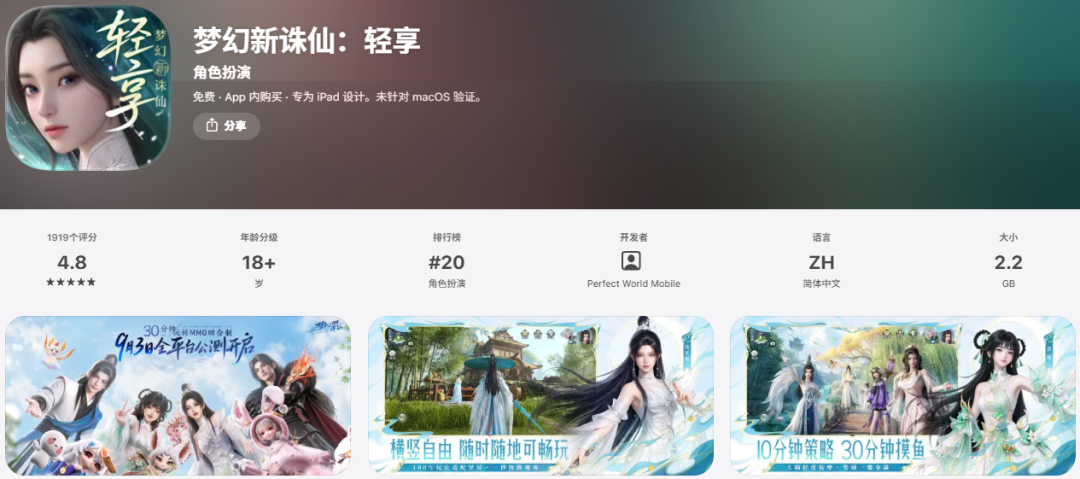
The first to face market validation was Dream New Zhu Xian: Light Play, which entered open beta across all platforms on September 3. It is also another major new release from Perfect World this year following Neverness to Everness in the first half. Viewed together, the two products move in almost opposite directions: the former bets on UE5, global distribution, and a high-spec urban open world, while the latter returns to Perfect World's most familiar Zhu Xian IP and turn-based MMO format, positioning 'mastering a turn-based MMO in 30 minutes' as its core selling point. One continues to explore new categories and younger users, while the other seeks incremental growth from a mature IP.
Dream New Zhu Xian: Light Play is both an extension of the Dream New Zhu Xian IP and a product experiment by Perfect World in response to the difficulties facing legacy MMOs. What testing and adjustments did it undergo? How has it performed after open beta? What specific burden-reduction changes did it make? As established MMOs broadly begin to reassess the time demands they place on users, what problem does Perfect World hope to solve with this product? Diandian Overseas breaks down and analyzes these questions below.
01
A Fresh Start for a Lightweight Standalone Product
200,000 iOS Downloads in Four Days of Open Beta
Dream New Zhu Xian: Light Play is not a new server or a nostalgia server for the original Dream New Zhu Xian. It is a standalone product with an independent client, version, and operation. The two share the Zhu Xian IP, but their characters, data, and ecosystems are not interoperable.
Viewed chronologically, the title took less than one year to go from receiving its publication approval to its official launch.
In November 2025, the title received its publication approval as a domestic online game. It was not until March this year that Perfect World began releasing product information in earnest. It then opened the limited, free-to-play, data-wipe 'Light Boat Test' on April 2, focusing on validating the season framework, basic combat, and lightweight daily routines.
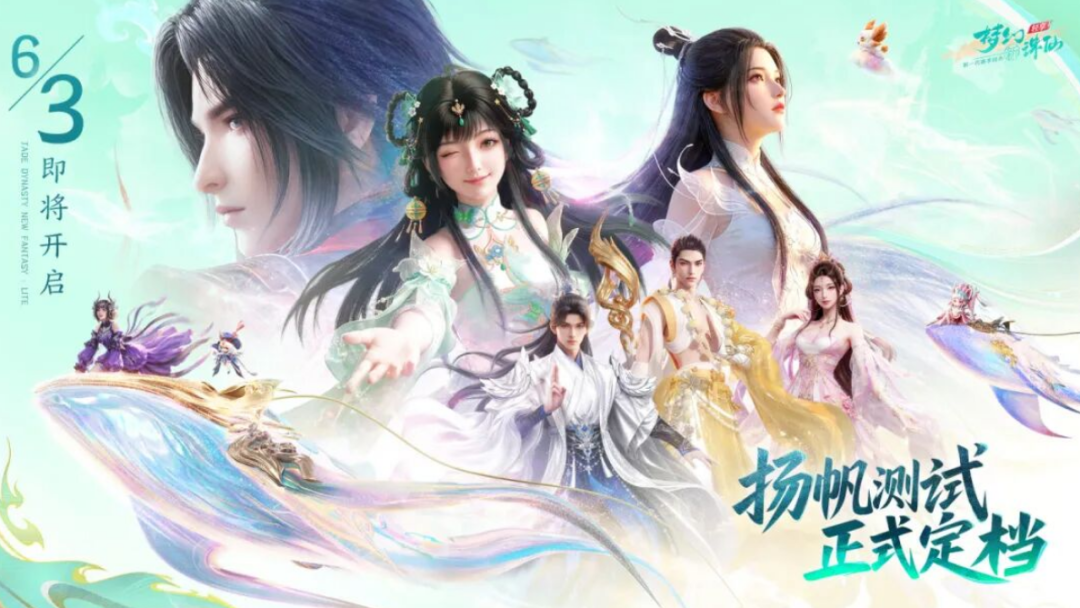
After the first test ended, the project team did not move directly into open beta. Instead, it readjusted the pet, equipment, trading, and quest systems based on player feedback. On June 3, it opened the limited, paid, data-wipe 'Set Sail Test,' giving the monetization and economy systems their first relatively complete evaluation. The official team also announced the open-beta date on August 3.
This pace shows that the title was not rushed to market, but its public testing cycle was still relatively concentrated. Between the two tests, the project team had to complete gameplay adjustments and launch preparations simultaneously. Whether it can continue iterating quickly in response to player feedback after open beta will be an important variable for subsequent operations.
Looking specifically at the open-beta performance, the game opened pre-downloads two days early, on September 1, and obtained approximately 56,000 iOS downloads on the first day and about 38,000 on the second. Daily downloads on the open-beta launch day were also close to 38,000, then gradually declined and currently stand at approximately 13,000.
On the revenue side, the title generated approximately $56,000 on its first day of open beta, equivalent to RMB 400,000, then rose to a period peak of $61,000 the following day, equivalent to RMB 430,000. Revenue remained around $48,000 on each of the next two days.
As of September 6, the fourth day of open beta, cumulative iOS downloads had reached approximately 196,000 and cumulative revenue approximately $214,000, equivalent to RMB 1.52 million.
Based on the results so far, Dream New Zhu Xian: Light Play has an initial IP foundation, but has not yet produced an especially strong breakout on iOS. Its subsequent performance will depend more on long-term retention, cross-platform users, and whether its trading ecosystem can become functional.
02
Fitting a Turn-Based MMO into 30 Minutes
How Does Dream New Zhu Xian: Light Play Reduce the Burden?
Beyond the initial results, the most important aspect to discuss remains the product's changes to the traditional turn-based MMO structure.
The first change is reducing the time burden. The game permanently caps character levels at 69. Players can reach the level cap in approximately eight days, then continue growing through realms, equipment, pets, and seasonal builds instead of constantly chasing levels as the server progresses.
Daily routines have also been compressed. Players only need to complete three random daily tasks each day, and unwanted tasks can be refreshed. Core progression resources have been consolidated into 'spirit jade,' with a weekly acquisition cap. Players can choose freely among daily activities, challenges, events, and competitive content rather than completing every fixed mode one by one.
On this basis, the game adds fortune management, reward recovery, story skipping, and solo speed-up features. Daily activities that previously depended on multiplayer teams can also be completed solo with the help of immortal companions. Combined with the ability to switch freely between landscape and portrait orientation, these features let players handle content during fragmented periods such as commutes and lunch breaks.
The changes to pets and equipment are even more direct. Battle pets no longer require skill-book insertion or slot-filling; skills can be switched using copper coins. Pet fusion follows deterministic rules: '5+5 guarantees six skills, and 6+6 guarantees seven skills.' Equipment no longer depends on repeated crafting. Top-tier equipment and special skills and effects mainly drop from dungeons, PvP, and other modes, while special effects are separated from the equipment itself, reducing the sunk cost of replacing gear.
The economy system is another important change. The game reduces the direct sale of stat-boosting bundles by the official team and shifts part of the monetization space toward cosmetics, passes, and player trading, rather than eliminating payment differences and random progression altogether.
At the same time, the seasonal system takes responsibility for long-term growth. Different seasons alter the build environment through adjustments to runes, sets, and equipment attributes. The four current schools can also form multiple builds around different runes.
Overall, Dream New Zhu Xian: Light Play does not turn a turn-based MMO into a casual game. It retains core content such as pets, equipment, trading, team play, and PvP. What it mainly cuts is the repetitive labor and probability-driven consumption that accumulate around these systems over time. This can lower the barriers to entry and return, but it creates another question: once level chasing and fixed daily routines are compressed, whether seasonal builds, the trading ecosystem, and social relationships can provide enough long-term goals will ultimately determine how far 'Light Play' can go.
03
Legacy MMOs Collectively Reduce the Burden
Mature IP Needs to Awaken More 'Dormant' Existing Players
In fact, Dream New Zhu Xian: Light Play's decision to reduce content is not an isolated product choice.
Over the past two years, terms such as 'light play,' 'easy play,' and 'burden reduction' have appeared frequently in the version plans of legacy MMOs. The main goal is to address existing players collectively running out of time, the high cost of returning, the exhaustion of nostalgia-server dividends, and player fatigue with endless server resets, thereby recovering more lapsed users.
Legacy MMOs have broadly developed along two burden-reduction routes. The first is to re-establish a relatively independent lightweight ecosystem. For example, the Fantasy Westward Journey PC game launched an easy-play server and readjusted its level, payment, and trading rules. The mobile version of Fantasy Westward Journey's Light Play server limits the scope of progression and the duration of paid progression. The easy-play server for the PC game Demi-Gods and Semi-Devils directly removed nearly 20 late-game progression systems, reduced the number of attempts for certain modes, and temporarily removed late-game content such as the Outer Realm and Viewing Mountains and Seas.
These products typically do not directly alter the official server. Instead, they open a separate server or independent region. The official server continues to carry the characters and assets accumulated by veteran players over many years, while the light-play server reimposes limits on progression speed within a clean economic environment.
The second route is to directly reduce repetitive labor within the original product. For example, Jian Wang 3 has continued to expand account-sharing features: after one character completes certain daily tasks, other characters on the same account do not need to repeat them. Its producer has also begun openly accepting that players do not need to remain online throughout an entire season as long as they are willing to return for the next one. Justice Online, meanwhile, has tried handing some repetitive tasks to an AI assistant called 'Little Lobster.' It can complete activities such as escort missions and all-in-one daily runs. Although its capabilities and stability remain limited, it has already advanced burden reduction from adjusting rewards to replacing player operations.
Overall, a light-play server does not truly solve only the problem of 'too many daily tasks.' Rather, it moves content that the official server would be afraid to overhaul into a new environment for redesign. It is also different from a nostalgia server: the latter seeks to restore the past, while the former proactively changes it.
Perfect World is familiar with the difficulties facing legacy MMO publishers. The company has cultivated MMOs since the PC-game era, and the Zhu Xian IP is one of its core assets with the longest operating history and the largest number of products.
Beginning with the Zhu Xian PC game launched in 2007, Perfect World has subsequently released the Dream Zhu Xian PC game, the Zhu Xian mobile game, Dream New Zhu Xian, Zhu Xian World, and the Zhu Xian 2 mobile game, among others.
The Zhu Xian mobile game, which entered open beta in 2016, has now been in operation for 10 years. Diandian Data shows that the title generated approximately $30.55 million in revenue in 2021, equivalent to RMB 217 million, but that figure fell to $9.66 million last year, equivalent to RMB 68.61 million. During the first eight months of 2026, average monthly iOS revenue was approximately $672,000, equivalent to RMB 4.77 million, while August revenue was approximately $585,000, equivalent to RMB 4.16 million. The game's revenue has been declining slowly, but its long operating cycle has allowed it to retain a certain revenue scale.
Dream New Zhu Xian, launched in June 2021, once delivered a higher revenue peak. In the first full month after open beta, iOS revenue reached $23.11 million, equivalent to RMB 164 million. As the product entered long-term operation, however, it moved into a clear long-tail decline, generating approximately $407,000 in August this year, equivalent to RMB 2.89 million.
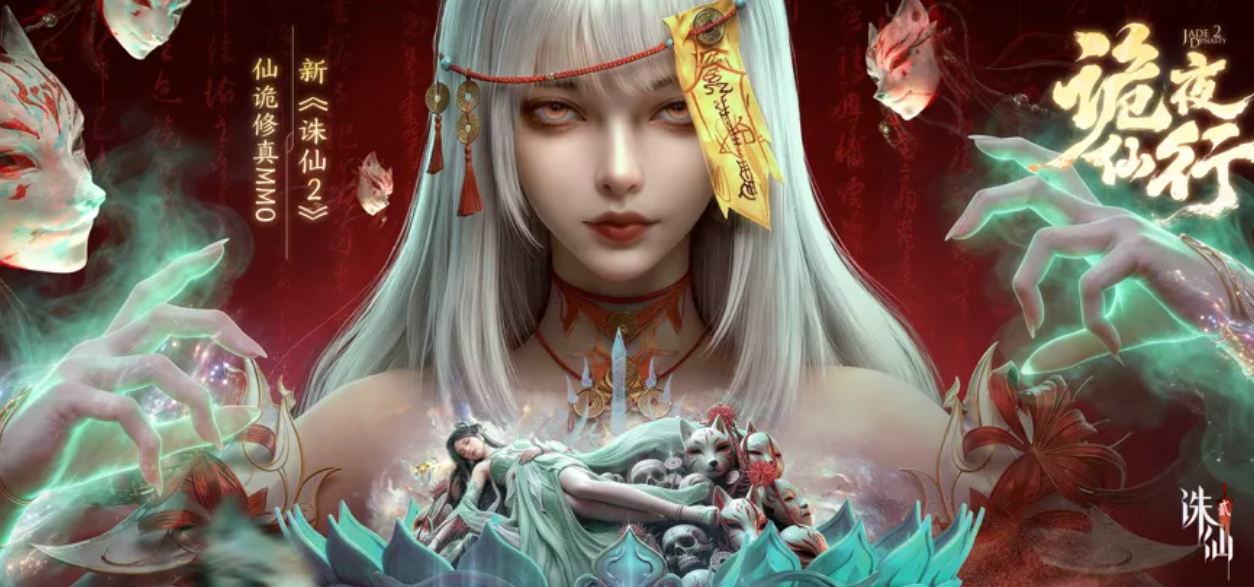
Zhu Xian 2 entered open beta in August 2025. Its first-month domestic iOS revenue was approximately $2.50 million, equivalent to RMB 17.75 million, before falling to $903,000 the following month. Its current monthly iOS revenue is approximately $111,000, equivalent to RMB 790,000, and cumulative revenue is $5.845 million, equivalent to RMB 41.50 million.
Overall, the Zhu Xian IP has not lost its commercial value. The Zhu Xian mobile game still generates revenue after 10 years of operation, and Dream New Zhu Xian has developed a relatively long revenue tail. Yet the changes in several core products from their launch peaks to current levels also show that a mature IP can provide a baseline of users but cannot prevent a traditional MMO from naturally aging.
Against this backdrop, Dream New Zhu Xian: Light Play looks more like a new entrance added by Perfect World for the Zhu Xian IP. It is not responsible for replacing products that have been operating for years, nor does it need to move all official-server users over. Its target is players who still recognize Zhang Xiaofan, Baguio, and Lu Xueqi, but no longer want to chase levels, clear daily tasks, and repeatedly build pets.